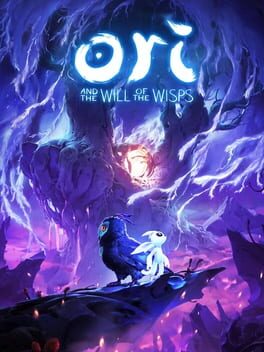
Ori and the Will of the Wisps — A Platforming Poem
Ori and the Will of the Wisps is one of the most beautiful video games ever made. Moon Studios took everything that made the original Ori and the Blind Forest special — the fluid movement, the emotional storytelling, the hand-painted art — and elevated it in every conceivable way. The result is a metroidvania platformer of staggering visual beauty, mechanical precision, and emotional power that stands among the finest games on any platform.
The movement system is a joy. Ori's repertoire of abilities — dash, double-jump, grapple, burrow, water dash, glide — chain together into fluid traversal sequences that feel like choreographed ballet. The game's best moments occur when all of these abilities are combined in breathtaking chase sequences where the environment crumbles around you and split-second decisions determine survival. These setpiece moments are gaming at its most thrilling.
The combat, a notable weakness of the original, has been completely overhauled. A diverse arsenal of Spirit Weapons — from sword-like Spirit Edge to long-range Spirit Arc — combined with Spirit Shards that modify abilities creates a robust action system that complements the platforming beautifully. Boss encounters are spectacularly designed, with the Mor the Spider and Shriek the Owl providing unforgettable climactic challenges.
Gareth Coker's soundtrack is transcendent. Every musical cue is precisely calibrated to amplify the emotional impact of the gameplay. The main theme builds from delicate piano to soaring orchestral grandeur in a way that mirrors Ori's own journey. The final hour of the game, scored with devastating beauty, will leave many players in tears.
The Spirit Trial time attack challenges, where players race against developer ghost data through obstacle-laden courses, reveal the full depth of the movement system. These optional challenges strip away combat and narrative, focusing entirely on pure traversal mastery. Achieving gold medals requires absolute precision and a deep understanding of movement tech that transforms casual players into speedrunning enthusiasts. The leaderboard system and community optimization have kept these challenges relevant years after launch.
The world design is meticulously crafted, with each zone offering a distinct visual identity and gameplay focus. The dark, oppressive Mouldwood Depths contrasts sharply with the sun-dappled Luma Pools. Baur's Reach, a frozen landscape haunted by a massive bear spirit, provides environmental puzzles unique to its setting. The Windswept Wastes introduce sand-surfing mechanics that feel completely distinct from the game's other traversal systems. This variety ensures that the experience never stagnates.
The side quest system, featuring the Spirit Well and NPC restoration missions, provides compelling optional content that enriches the world. Rebuilding the Wellspring Glades settlement by rescuing displaced spirits and funding construction projects creates a tangible sense of positive impact. Watching the village grow from a desolate clearing to a thriving community mirrors Ori's own journey of restoration and hope.
The Shard system provides meaningful character customization that allows players to tailor Ori's abilities to their preferred playstyle. Equipping shards that enhance combat damage, provide life regeneration, reveal map secrets, or modify traversal mechanics creates build diversity that encourages experimentation. The limited shard slots force prioritization decisions that change how the player approaches both combat and exploration. The ability to swap shards at any Spirit Well provides flexibility without sacrificing the commitment of meaningful choices.
The emotional narrative, while told with minimal dialogue, achieves devastating power through its visual storytelling and musical accompaniment. The opening sequence, which establishes the relationship between Ori and the owl Shriek through wordless animation, creates immediate emotional investment. The game's final act, which brings Ori's journey to a conclusion that is simultaneously heartbreaking and beautiful, has been widely cited as one of the most emotionally affecting conclusions in gaming history. The post-credits scene provides a moment of bittersweet hope that resonates long after the controller is set down.
The technical performance, particularly on Xbox Series X and PC, showcases the game's visual artistry at its finest. The 4K resolution reveals extraordinary detail in the hand-painted backgrounds, the 120fps mode transforms the already precise controls into something approaching perfection, and the HDR implementation makes the game's bioluminescent environments glow with otherworldly beauty. The loading times are virtually nonexistent, ensuring that the flow of exploration and combat is never interrupted.
Ori and the Will of the Wisps is a masterpiece that proves video games can be genuine works of art. It is beautiful, challenging, heartbreaking, and ultimately uplifting in a way that few games of any genre can match. It is a poem written in light and movement.
The visual and auditory sensory experience of Ori and the Will of the Wisps cannot be overstated; it is quite literally a moving, breathing painting. The team at Moon Studios painstakingly handcrafted a lush, multi-layered, luminous world that constantly awes the player with its breathtaking artistic direction. Every single frame bursts with vibrant, ethereal colors, dynamic lighting, and incredibly complex, fluid animations that make Ori feel incredibly agile and alive. This striking visual mastery is completely intertwined with an emotionally sweeping, devastatingly beautiful orchestral score composed by Gareth Coker, which expertly guides the player's emotional state from triumphant joy to profound, quiet sorrow. Will of the Wisps is so much more than just a mechanically perfect, reflex-testing Metroidvania; it is a deeply moving, melancholic, and ultimately hopeful fable about sacrifice, found family, and the heavy burden of restoring light to a world completely consumed by darkness.