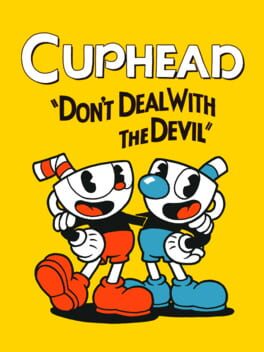
Cuphead — A Hand-Drawn Masterpiece of Challenge and Charm
Cuphead is a game that should not exist. The idea of hand-drawing and hand-inking every single animation frame in the style of 1930s Fleischer and Disney cartoons — then building a challenging run-and-gun game around that art — sounds like beautiful madness. Studio MDHR, a small Canadian independent developer, spent seven years realizing this vision, and the result is one of the most visually stunning and mechanically punishing games ever created.
Every frame of Cuphead is a work of art. The character designs, the boss transformations, the background paintings — every element is rendered with faithful attention to the techniques of golden-age animation. The slight imperfections of hand-drawn lines, the watercolor backgrounds, the film grain overlay — all of these create an aesthetic that is absolutely singular in gaming. There is nothing else that looks like Cuphead, and there likely never will be.
The boss fights are the main attraction, and they are uniformly excellent. Each boss progresses through multiple phases, with each phase introducing new attack patterns and visual spectacles. The battles against King Dice, the Devil, and the Delicious Last Course's Chef Saltbaker are masterfully designed gauntlets that demand precise pattern recognition and pixel-perfect positioning.
The Delicious Last Course DLC added a new playable character, Ms. Chalice, along with a new island of bosses that are among the game's finest. Ms. Chalice's unique abilities — a parry dash, a double jump, and a dodge roll — offer meaningfully different approaches to existing bosses and justify replaying the entire game.
The run-and-gun levels, while overshadowed by the boss fights, provide essential pacing variety. These side-scrolling action stages, inspired by Contra and Gunstar Heroes, demand precision platforming while dodging waves of enemies and environmental hazards. The hidden coins scattered throughout these levels reward thorough exploration and provide currency for purchasing new abilities from Porkrind's Emporium.
The soundtrack by Kristofer Maddigan is a revelation. Performed by a live jazz ensemble, the big-band and ragtime compositions are authentic in a way that no synthesized soundtrack could achieve. The high-energy brass and percussion during boss fights create an infectious energy that drives the player forward, while the intermission screens feature softer piano arrangements that provide moments of calm between battles. The music is so good that it stands as a perfectly listenable album independent of the game.
The cooperative play transforms the experience into a social event. Playing with a partner adds the ability to parry off each other's heads for extra height and provides a revive mechanic that keeps runs alive. The shared screen, however, means both players must maintain spatial awareness, and the chaos of two characters dodging bullet patterns simultaneously creates moments of both hilarity and frustration that strengthen the cooperative bond.
The charm system provides meaningful build customization that affects Cuphead's combat capabilities. Equipping different charms — such as the Smoke Bomb for invincible dashes, the Heart for extra health at the cost of damage, or the Coffee for automatic super meter gain — allows players to tailor their approach to each boss's specific challenges. The weapon variety, from the homing Chaser to the powerful Charge Shot to the close-range Spread, creates tactical decisions about loadout optimization that add strategic depth beneath the surface-level pattern recognition.
The attention to historical accuracy in the animation extends to techniques that most players will never consciously notice. The rubber-hose animation style, the deliberate color palette limitations, the rotoscoped backgrounds, and the authentic Foley-style sound effects all contribute to an atmosphere of loving homage that animation historians have praised extensively. Studio MDHR consulted with animation experts and studied original Fleischer Studios production cels to ensure that every visual element met the standard of authenticity they had set.
The Delicious Last Course's boss design represents the studio's creative peak, with encounters like Chef Saltbaker, Mortimer Freeze, and The Howling Aces achieving a perfect synthesis of visual spectacle, pattern complexity, and personality that surpasses even the base game's finest moments. Ms. Chalice's unique ability set, including a parry dash and invincible roll, opens new strategic approaches to every encounter and provides compelling reasons to replay the entire game.
Cuphead is a celebration of artistic passion and dedication. It is a game that respects the intelligence and persistence of its players, offering challenges that feel insurmountable until the moment they suddenly don't. The satisfaction of defeating a boss after dozens of attempts — watching that victory screen emerge through a haze of frame-perfect dodges — is a feeling that few games can replicate.
Behind the agonizing difficulty and the incredibly tight, pixel-perfect boss patterns completely lies an unprecedented, breathtaking dedication to a lost art form. Studio MDHR did not just attempt to casually emulate the 1930s rubber-hose animation style; they painstakingly, exhaustingly resurrected it. Every single frame of animation for Cuphead, Mugman, and the wildly imaginative, horrific bosses was traditionally hand-drawn and inked on authentic paper, while the watercolor backgrounds were physically painted with astonishing attention to detail. This insane level of obsessive craftsmanship is seamlessly married to a sensational, toe-tapping, three-hour original jazz soundtrack performed by a massive live big band orchestra. The result is a total sensory triumph that makes every single frustrating death feel slightly less agonizing, because you know you get to witness another few seconds of this dizzying, absolute masterpiece of interactive art. It is a stunning, flawless fusion of punishingly demanding gameplay and unparalleled artistic vision.