Minecraft (2011): The Existential Loneliness and Infinite Poetry of the Blank Canvas
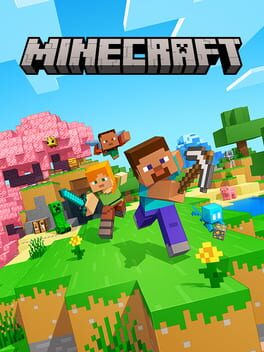
To attempt to analyze Minecraft through the traditional, restrictive lenses of conventional video game critique—assessing its narrative structure, its graphical fidelity, its character arcs, or its scripted set-pieces—is a fundamentally flawed endeavor. Created initially as a small passion project by a single Swedish developer, Markus 'Notch' Persson, and officially released in its full form in 2011, Minecraft is not a game in the conventional sense. It is a cultural phenomenon, an interactive digital Lego set of infinite proportions, and arguably the most profound experiment in emergent gameplay the medium has ever seen. Standing in stark, deliberate defiance of an industry obsessed with photorealistic graphics, cinematic cutscenes, and linear storytelling, Minecraft presents a world composed entirely of low-resolution, one-meter-cubed blocks. There is no tutorial, no overarching questline, no spoken dialogue, and no mandated purpose. It drops you into an infinite, procedurally generated landscape of blocky mountains, pixelated oceans, deep caverns, and cubic forests, and essentially tells you: 'You are alive. Figure out the rest.' In doing so, Minecraft inadvertently becomes a profound philosophical meditation on human existence, the absolute terror of absolute freedom, and the haunting beauty of profound loneliness.
The phenomenology of your 'First Night' in Minecraft is a universally shared rite of passage, an experience burned into the collective consciousness of modern gamers across the globe. You spawn into a vibrant, seemingly idyllic world under a bright, square sun. You wander aimlessly, perhaps punch a tree to gather a block of wood, marvel at the blocky pigs and sheep, and explore the rolling green hills. But then, the sun begins its inevitable descent. The sky turns a bruised shade of purple, the jaunty piano music fades into silence, and the world is plunged into darkness. Suddenly, the silence is broken by the rattling of skeletal bones, the guttural moans of zombies, and the terrifying, hissing fuse of the iconic Creeper. The sheer existential dread that sets in during this first night is palpable. Stripped of any weapons, armor, or meaningful shelter, you are reduced to your most primal, prehistoric instincts. You frantically dig a hole in the side of a dirt hill, seal yourself inside with a single block of earth, and sit in absolute darkness, listening to the monsters prowling just inches from your fragile sanctuary. In that small, suffocating dirt hole, waiting agonizingly for the sunrise, Minecraft teaches you the intrinsic value of shelter, light, and safety. It makes you earn your survival, replicating the ancient human struggle against the unforgiving elements.
However, once the basic mechanics of survival are mastered—once you have forged an iron sword, built a rudimentary wooden house, and planted a wheat field to stave off starvation—the game undergoes a miraculous and expansive transformation. It shifts from a primal survival horror experience into a vast, limitless engine of human creativity. The true magic of Minecraft is that the world is entirely malleable. Every single block you see can be broken, collected, and placed elsewhere. This absolute agency taps into the deepest psychological desires of human nature: the urge to impose order upon chaos, to mold nature to our will, and to leave a lasting mark upon an indifferent universe. You begin by building a wooden cabin, but soon, the ambition grows. You delve deep into the earth, risking your life in dark, lava-filled ravines to mine precious diamonds. You construct towering, physics-defying castles, complex automated rail systems, and sprawling underground cities. The introduction of 'Redstone,' a rudimentary electrical engineering system, allows players to build functioning calculators, automated farms, and complex logic gates inside a video game. Minecraft is the ultimate blank canvas, limited solely by the boundaries of the player's own imagination and perseverance.
Yet, underlying this boundless creativity is a pervasive, almost suffocating atmosphere of melancholy and isolation. In the single-player mode, you are completely alone. You can build a sprawling, magnificent empire, with towering monuments, bustling automated systems, and majestic gardens, but there is no one there to witness it. You are a solitary god wandering through the halls of an empty heaven of your own making. You stumble upon abandoned mineshafts deep underground or ruined, moss-covered portals—echoes of a civilization that is long dead. You are the last of your kind. This profound sense of solitude is perfectly encapsulated by Daniel 'C418' Rosenfeld’s legendary ambient soundtrack. The sparse, echoing piano chords and synthetic sweeps do not sound like the triumphant anthems of a heroic conqueror. Instead, they evoke a deep, introspective nostalgia, floating in softly as you watch a blocky sunset from the roof of a castle you built with your own hands. The music perfectly scores the beautiful tragedy of being the only conscious observer in an infinitely expanding universe. It is a soundtrack that encourages introspection, making the digital isolation feel oddly comforting rather than terrifying.
Eventually, the game does offer a climax, a journey to a bleak, floating void called 'The End,' where you must slay the monolithic Ender Dragon. But even in its conclusion, Minecraft subverts traditional gaming expectations. Upon defeating the dragon and stepping into the exit portal, you are not treated to a standard credits sequence congratulating you on your high score or combat prowess. Instead, the game presents you with the 'End Poem,' a scrolling, nine-minute metaphysical dialogue written by Irish novelist Julian Gough. The poem breaks the fourth wall entirely, presenting a conversation between two god-like entities discussing the player—not the avatar inside the game, but you, the human sitting at the screen. They talk about the universe, the illusion of the game, the power of love, and the dream of life itself. 'And the universe said I love you because you are love,' the text reads, elevating a game about placing dirt blocks into a transcendent, spiritual awakening. It reminds the player that the worlds we build in our minds are just as real as the ones we inhabit physically.
Minecraft is a testament to the enduring power of play and the unyielding human desire to create. It proved that players do not always need to be led by the hand, that photorealistic graphics are secondary to deep mechanics, and that given the right tools, the human mind is capable of conjuring infinite wonders. It is a lonely, brilliant, and infinitely poetic sandbox that changed not just the gaming industry, but the way an entire generation interacts with the digital realm.