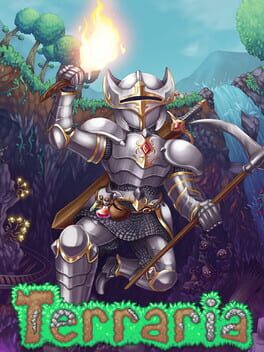
Terraria — The Game That Never Stops Giving
Terraria is the most generous video game ever made. Since its initial release in 2011, Re-Logic has poured a staggering amount of free content into this 2D sandbox adventure, transforming what began as a charming Minecraft-inspired side-project into one of the deepest, most replayable, and most content-rich games in the history of the medium. With over 5,000 items, dozens of bosses, hundreds of enemies, and an endgame that would shame many full-priced RPGs, Terraria offers a value proposition that is almost absurd.
The progression system is the game's backbone. What begins as a humble mining and building experience gradually evolves into a full-blown action RPG. Defeating the Wall of Flesh triggers Hardmode, which essentially doubles the game's content by introducing new biomes, enemies, ores, and bosses. The Lunar Events, the Pumpkin and Frost Moons, and the multi-phase Moon Lord fight provide endgame challenges that demand optimized builds and skilled play. The journey from wooden sword to Terra Blade to Zenith is one of the most satisfying power curves in gaming.
Building is equally compelling. The grid-based system allows for intricate structural designs, from functional NPC housing to elaborate pixel-art creations. The painting and lighting systems add artistic depth, and community creations range from faithful recreations of real-world landmarks to entirely original architectural masterpieces. The wiring and logic gate systems enable redstone-style contraptions for the technically inclined.
Multiplayer transforms the experience entirely. Tackling boss fights with friends, pooling resources for massive construction projects, or competing in PvP arenas with custom gear creates endless social possibilities. The game supports both local and online co-op, and expert servers with custom content provide an additional layer of community engagement.
The class system, hidden beneath the surface, reveals itself through accessories and armor combinations that transform your character archetype entirely. A Summoner build, controlling an army of minions while dodging projectiles, plays entirely differently from a Melee warrior face-tanking enemies with life-steal accessories, which plays differently still from a Mage raining celestial destruction from above. The fact that all of these playstyles are viable for every boss encounter speaks to the extraordinary balance Re-Logic has achieved.
The modding community has extended Terraria's lifespan indefinitely. The Calamity mod adds an entirely new progression tier with original bosses, biomes, and over 1,800 new items. The Thorium mod expands the class system with new archetypes. The tModLoader platform, officially supported by Re-Logic, makes installation and management of mods accessible to all players. This thriving modding ecosystem ensures that even players who have exhausted the vanilla content have hundreds of additional hours of curated gameplay waiting for them.
The pixel art style, while initially modest, has evolved through years of updates into something genuinely beautiful. The lighting effects, particle systems, and background layers create atmospheric environments that transcend their 2D limitations. The underground Hallow, with its crystal caverns and pastel color palette, and the corrupted underground, with its creeping purple tendrils, create visual contrasts that make exploration consistently rewarding.
The boss progression creates one of gaming's most satisfying difficulty curves. From the manageable Eye of Cthulhu to the terrifying Wall of Flesh that gates the Hardmode transition, through the Mechanical Bosses and Plantera to the cosmic Lunar Events and the final confrontation with Moon Lord, each boss encounter teaches new mechanics and demands new strategies. The Expert and Master difficulty modes add exclusive drops and modified attack patterns that provide fresh challenges even for veterans who have defeated every boss dozens of times.
The event system provides some of the game's most memorable and challenging content. The Goblin Army, the Pirate Invasion, the Solar Eclipse, and the Old One's Army each transform the player's home base into a battlefield, requiring defensive preparation and adaptive tactical play. The Pumpkin Moon and Frost Moon events, which escalate in intensity across multiple waves, provide time-pressure challenges that test the player's DPS optimization and survival skills simultaneously.
Terraria is a testament to the power of passion, persistence, and player-first design. Re-Logic's decade-long commitment to expanding the game — culminating in the massive 1.4 Journey's End update and subsequent additions — has created a legacy that few developers can match. This is a game that truly gives back more than it takes, and that generosity extends to every single pixel.
Terraria's approach to multiplayer creates some of gaming's most memorable cooperative experiences. Sharing a world with friends transforms boss preparation into communal strategy sessions, mining expeditions into social adventures, and boss encounters into chaotic, thrilling team efforts. The ability to host dedicated servers with persistent worlds enables communities to build shared civilizations that evolve over months of collaborative play, creating investment and attachment that extends far beyond individual gaming sessions.
The building and aesthetic customization systems provide creative outlets that rival dedicated construction games. The painting system allows every block to be tinted in dozens of colors. The wiring and actuator systems enable complex mechanical contraptions including automated farms, trap corridors, and theatrical lighting displays. The furniture variety — spanning dozens of themed sets from Dynasty to Steampunk to Martian — allows architectural expression that transforms functional shelters into genuine works of digital art. The community's building showcases demonstrate creativity that pushes the game's simple pixel-art aesthetic to extraordinary heights.
The progression arc across a typical Terraria playthrough is remarkable in its scope, transforming the player from a vulnerable novice armed with copper tools into a godlike warrior wielding weapons that fill the screen with destructive energy. The transition from Pre-Hardmode to Hardmode, triggered by defeating the Wall of Flesh, effectively doubles the game's content by introducing new biomes, enemies, ores, and boss encounters that fundamentally alter the world's geography and challenge level. This mid-game escalation ensures that experienced players maintain engagement through dramatically increased difficulty and reward.
Terraria is one of the greatest values in gaming. Its staggering amount of content, its passionate community, and its unwavering commitment to player creativity make it an essential experience.