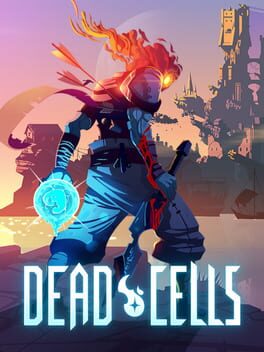
Dead Cells — The Roguevania That Keeps on Giving
Dead Cells is the perfect action game for people who can never decide whether they prefer roguelikes or metroidvanias. Motion Twin, a small French cooperative studio, fused both genres together with surgical precision, creating a game that offers the instant gratification of a roguelike's randomized runs and the satisfying progression of a metroidvania's permanent unlocks. The result is one of the most replayable and mechanically satisfying action platformers ever made.
The combat is extraordinary. The game offers over a hundred weapons and skills, from classic swords and bows to bizarre items like a flaming whip, a tesla coil, and deployable turrets. Each weapon has distinct timing, range, and synergies, encouraging experimentation across runs. The roll-and-parry defensive mechanics are tight and responsive. The game's commitment to 60fps performance ensures that every input feels immediate and precise.
The biome structure cleverly blends randomization with authored design. Each run offers branching paths through differently themed biomes, each with unique enemies, traps, and visual identities. The permanent Rune unlocks — vine climbing, teleportation, ground smashing — gradually open new routes through the island, creating that classic metroidvania thrill of discovering a previously inaccessible path.
Post-launch support has been phenomenal. Multiple free DLCs and paid expansions have added new biomes, bosses, weapons, and an entirely new progression axis through Boss Cells that dramatically increase difficulty. The game in its current state is vastly larger and more varied than its launch version, a testament to Motion Twin's dedication to their playerbase.
The Boss Cell system provides a brilliantly designed difficulty curve that transforms the game with each tier. Each Boss Cell activation modifies the game in meaningful ways — reducing healing flask charges, adding new enemy types, introducing Malaise (a progressive infection that punishes cautious play), and locking access to certain safe routes. The 5BC difficulty requires near-perfect play and intimate knowledge of every encounter, creating an endgame that sustains the most dedicated players for hundreds of additional hours.
The build variety is staggering. The combination of weapons, skills, and mutations (passive upgrades chosen at specific checkpoints) creates thousands of viable build configurations. A Brutality build that dual-wields rapid weapons and relies on aggressive combat plays entirely differently from a Survival build focused on shields and heavy weapons, which feels nothing like a Tactics build that uses turrets and ranged attacks from safety. The colorless items, which scale with any stat, and legendary weapons, which scale with the player's two highest stats, add further customization depth.
The aesthetic evolution of the game across its years of updates deserves recognition. The pixel art, enhanced by sophisticated lighting and particle effects, creates environments of remarkable visual personality. The Fractured Shrines shimmer with otherworldly energy, the Queen's Garden pulses with bioluminescent plant life, and the Distillery reeks with industrial grime — each biome tells a visual story that enriches the game's sparse but compelling lore.
The mutation system provides meaningful build customization that persists across individual runs. Selecting three mutations from an expanding pool at specific checkpoints allows players to tailor their survival strategy to complement their chosen weapon loadout. The tension between aggressive mutations that increase damage output and defensive mutations that provide healing or damage reduction creates interesting strategic trade-offs. The new mutations added with each DLC ensure that the meta-game continues to evolve, preventing any single build from dominating indefinitely.
The lore, delivered through environmental storytelling and collectible room descriptions, paints a surprisingly rich narrative of a kingdom ravaged by a mysterious alchemical plague. The King's increasingly desperate attempts to contain the infection, the transformation of citizens into the Malaise-stricken enemies you fight, and the truth behind the Beheaded protagonist's immortality create a narrative framework that contextualizes the gameplay's repetitive structure within a coherent fictional world.
The accessibility options and difficulty modifiers demonstrate Motion Twin's commitment to inclusive game design without compromising the core challenge. Custom difficulty settings allow players to adjust damage taken, enemy health, and time freeze during parrying. These options enable newcomers to experience the game's excellent content while preserving the punishing difficulty that veteran players demand. The assist mode's implementation has been praised as a model for how challenging games can broaden their audience without diluting their identity.
The branching level structure creates strategic decision-making that extends beyond moment-to-moment combat. Choosing between the Promenade and the Toxic Sewers at the game's first junction point determines not only immediate enemy composition but also which subsequent biomes become available. This cascading route selection, combined with the different item pools and boss encounters tied to each path, ensures that consecutive runs can have wildly different challenges and rhythms, preventing the repetition that plagues lesser roguelikes.
Dead Cells is a game of perfect tempo. Every run feels achievable, every death feels educational, and every weapon combination feels worth exploring. It is the kind of game that lives permanently on your hard drive, always ready for one more run.