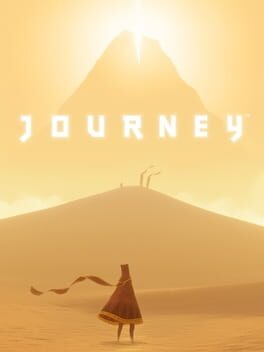
Journey — The Wordless Pilgrimage of the Human Soul
There is an eternal, exhaustingly repetitive debate in the cultural sphere regarding whether video games can truly be classified as "High Art" in the same esteemed breath as cinema, literature, or classical music. Critics often point to the medium's reliance on excessive violence, repetitive dopamine loops, and adolescent power fantasies as proof of its inherent immaturity. In 2012, however, an independent development studio named thatgamecompany released a brief, downloadable title for the PlayStation 3 that single-handedly laid this debate to rest forever. Journey is not merely a video game; it is a transcendent interactive poem, a profound distillation of Joseph Campbell’s "Hero’s Journey," and a breathtakingly pure exploration of human connection, isolation, struggle, and apotheosis. Stripped entirely of the bloated mechanics that define modern gaming—there is no heads-up display, no health bar, no combat, no inventory screen, and absolutely no spoken or written dialogue—Journey manages to communicate deeper, more universal emotional truths through its mechanics and aesthetics than most games accomplish in a hundred hours of exposition. It is a masterclass in minimalist design, proving that when the extraneous noise is stripped away, what remains can pierce directly into the human soul.
The game begins with an image of profound, desolate beauty. You awaken as an anonymous, robed figure—a mystic wanderer with no face, no gender, and no name—in the midst of an endless, shimmering ocean of golden sand. You stand up, and the camera slowly pans up to reveal your one and only objective: a massive, towering mountain in the far distance, its peak split by a brilliant, glowing crevice of white light. There are no waypoints, no mission logs, no tutorials telling you what to do. The mountain is an instinctual, magnetic pull. You simply walk toward the light. As you crest the first massive sand dune, the title of the game elegantly fades into the sky, accompanied by the mournful, sweeping strings of composer Austin Wintory’s Grammy-nominated score. In this opening moment, Journey establishes its core visual and emotional vocabulary. You are infinitesimally small in a world that is staggeringly ancient and vast. The ruins of a forgotten, majestic civilization lay half-buried beneath the sands, hinting at a history of hubris and collapse. Yet, the game never burdens you with extensive lore; it allows the environment to speak entirely for itself through the language of architecture, lighting, and atmosphere.
Movement in Journey is an absolute, kinetic joy, functioning as a primary source of emotional expression. As you collect glowing glyphs hidden throughout the ruins, the magical scarf trailing behind your character grows longer. This scarf is the source of your power, allowing you to leap gracefully into the air and glide over the dunes. When you slide down massive, sun-drenched hills of sand, the camera pulls back, the music swells triumphantly, and you feel a profound, childlike sense of liberation and euphoria. You interact with magical creatures made entirely of cloth, freeing them from cages so they can flutter around you like a flock of sympathetic birds, carrying you across vast, bottomless chasms. But the golden warmth of the desert does not last forever. The genius of Journey’s pacing is that it mirrors the arc of a human life. The joyous, effortless exploration of youth eventually gives way to the dark, terrifying depths of the underground ruins, where massive, mechanized stone serpents hunt you in the shadows, representing the inevitable encounters with trauma, fear, and loss. Your glowing scarf is violently torn away by these beasts, rendering you small, grounded, and vulnerable once again.
However, the crowning achievement of Journey, the mechanic that elevates it from a beautiful walking simulator into an absolute masterpiece of sociology and empathy, is its revolutionary approach to multiplayer. As you traverse the lonely desert, you may suddenly see another robed figure in the distance. This is not an artificial intelligence; it is another real human player, somewhere in the world, playing the game at the exact same time. But there is no matchmaking lobby, no voice chat, no text chat, and no display of their username. You are entirely anonymous. Your only means of communication is a single button that emits a melodic "chirp" and a small glowing symbol. The profundity of this limitation cannot be overstated. By removing language and identity, the game eradicates the toxicity, competition, and ego that plague traditional multiplayer spaces. You cannot hurt the other player; you can only help them. When you stand close to one another, your scarves glow, recharging each other's ability to fly. You find yourselves instinctively waiting for one another at the edge of cliffs, guiding each other to hidden secrets, and chirping excitedly when you accomplish something together. Through these incredibly limited mechanics, a staggering, profound human bond is formed. You fall in love with a complete stranger through the shared struggle of the pilgrimage.
This bond is tested to its absolute limit in the game's final act. As you and your companion reach the base of the glowing mountain, the warm sands are replaced by blinding, freezing snow. The wind howls, pushing you back with immense force. Your scarf freezes solid, shattering your ability to fly. The music transitions from sweeping strings to a slow, agonizing, mournful cello. Every step forward becomes a brutal, heavy struggle against the elements. If you are playing with a companion, you instinctively huddle together in the blizzard, chirping weakly just to reassure each other that you are not alone in the dark. And then, near the very summit, the cold finally overcomes you. Your character collapses into the snow, the screen fades to white, and the music dies. It is a poignant, devastating representation of physical death.
But Journey does not end in despair. In a moment of absolute cinematic apotheosis, accompanied by Wintory’s swelling orchestral score, you are resurrected. You burst forth from the snow, soaring into the clouds in a vibrant, triumphant flight toward the summit's light. The music crests into a soaring crescendo of pure, unadulterated joy and catharsis. You glide through waterfalls and ancient arches alongside your companion, transcending physical limitations, reaching the peak, and walking together into the blinding white light. As the screen fades, the credits roll, and the game reveals one final, beautiful secret: a list of the PlayStation Network usernames of the strangers you met along the way. Seeing the name of the person who stayed by your side through the freezing snow triggers a profound sense of gratitude and bittersweet sorrow. Journey is a flawless masterpiece that reminds us that while the path of life is ultimately one we must walk toward our own inevitable end, the journey is made beautiful by the brief, shining moments we share with others in the dark.