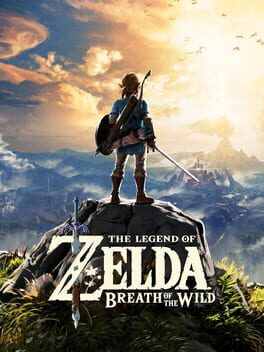
The Legend of Zelda: Breath of the Wild — The Melancholic Poetry of Untamed Freedom
In the modern landscape of open-world video games, there exists a paralyzing, industry-wide disease of over-design. For years, map screens have been violently cluttered with hundreds of glowing icons, mini-maps have constantly dictated the player's every turn, and invisible walls have boxed explorers into predetermined paths, whispering the illusion of freedom while holding them firmly by the hand. The sense of profound mystery—the very core tenet of exploration—had been aggressively optimized out of existence by risk-averse developers. For decades, even Nintendo’s own legendary The Legend of Zelda franchise had settled into a beloved, but undeniably rigid and predictable formula: find a dungeon, acquire a specific item, use that item to defeat the boss, and linearly move on to the next. But in 2017, Nintendo did the unthinkable. They took their most sacred, time-honored blueprint, tore it to absolute shreds, and scattered the pieces to the wind. The Legend of Zelda: Breath of the Wild was not merely a return to the franchise's original 1986 roots of pure, unguided exploration; it was a profound, industry-shattering paradigm shift. It is a masterpiece that fundamentally trusts the player's intelligence, curiosity, and intuition. It is a game that does not point you toward an adventure; rather, it provides you with an intricately simulated, breathtakingly beautiful world and simply invites you to exist within it.
The brilliance of the game is communicated flawlessly in its sublime, understated opening minutes. You, playing as the legendary hero Link, awaken in the dark, high-tech amniotic fluid of the Shrine of Resurrection with absolutely no memories of who you are, what has happened, or what you are supposed to do. You step out of the dark cave and walk to the edge of a cliff, and the camera gracefully sweeps outward to reveal the staggering, sun-drenched expanse of the ruined Kingdom of Hyrule. There is no triumphant orchestral fanfare, no lengthy expositional cutscene, and no guiding arrow plastered on the screen. There is only the gentle rustling of the wind through the tall grass, the distant chirp of a bird, and a few sparse, melancholic notes played on a lonely piano. In that breathtaking moment, the game silently communicates its greatest, most revolutionary mechanic: If you can see it, you can go there. That distant, snow-capped peak piercing the clouds? You can climb it. That dense, fog-shrouded forest on the horizon? You can walk into it. The towering, ominous castle swirling with dark malice at the center of the map? If you are foolish and brave enough, you can grab a tree branch and run straight toward it right now. The sheer, unadulterated terror and euphoria of this absolute, uncompromising freedom is intoxicating.
Hyrule in Breath of the Wild is not a bustling, triumphant kingdom waiting to be saved; it is a majestic, post-apocalyptic graveyard that has already been lost. One hundred years prior to your awakening, the primal, chaotic force known as Calamity Ganon decimated the land, slaughtered the kingdom's champions, and left the world in ruins. Yet, this apocalypse is not depicted as a grim, ash-covered, irradiated wasteland. Instead, nature has gloriously reclaimed the tragedy. Thick green vines wrap around the rusted, lifeless husks of ancient mechanical Guardians. Deer graze peacefully in the ruins of what used to be a bustling town square. The world is profoundly quiet, steeped in a beautiful, aching loneliness. The soundtrack reflects this perfectly; composed primarily by Manaka Kataoka, it relies on minimalist, ambient piano strokes that drift in and out like the wind, refusing to overpower the natural sounds of the world. You spend hours simply wandering, climbing cliffs, foraging for apples, hunting wild boar, and watching the sunset paint the sky in hues of violet and gold. The game teaches you that the journey is not a means to an end; the journey is the entirety of the experience.
Mechanically, the game operates on a proprietary "chemistry and physics engine" that demands emergent, creative thinking rather than rote memorization. Fire spreads through dry grass, creating updrafts of hot air; if you jump and deploy your paraglider over these flames, you are propelled high into the sky. If a severe thunderstorm rolls in, any metallic weapon or shield you carry will act as a lightning rod, forcing you to either unequip it immediately or cleverly throw it at an enemy right before the lethal bolt strikes. If you chop down a tree at the edge of a ravine, the massive trunk will fall and create a makeshift bridge. The world is a massive, interlocking puzzle of physical rules that consistently reward experimentation. This systemic design completely shatters the traditional concept of "solving" a problem. If you encounter an enemy Bokoblin encampment, the game does not care how you defeat them. You can sneak in at night and steal their weapons while they sleep, you can roll a massive boulder down a hill to crush them, you can shoot a fire arrow at an explosive barrel, or you can simply attach Octorok balloons to a heavy metal slab, float it over their heads, and drop it. The game hands you the paint, the brushes, and the canvas, but it never, ever tells you what to draw.
Perhaps the most controversial, yet philosophically vital mechanic is the weapon durability system. Every sword, bow, and shield in the game is fragile and will inevitably shatter into pieces after repeated use. Many players initially hated this, wanting to hoard the legendary, powerful weapons they found. But the genius of this system is that it forcefully breaks the player's psychological attachment to material possessions. It forces you out of your comfort zone, demanding that you constantly improvise. When your broadsword breaks mid-combat, you might be forced to pick up a fallen enemy's spiked club, or grab a rusty pitchfork, or even use a Korok leaf to blow enemies off a steep cliff. The transience of your weapons mirrors the transience of the ruined world around you. You are a survivor, living off the land, constantly adapting to whatever the chaotic environment throws at you.
Breath of the Wild’s narrative structure is equally fragmented and nonlinear. Because you can go anywhere at any time, the story is not spoon-fed to you; it is uncovered by you. Through finding specific geographical locations across the massive map, Link unlocks fractured, painful memories of the past—of Princess Zelda’s desperate, tragic struggle to awaken her sealing powers, of the fallen champions who trusted him, and of the bitter sting of their ultimate failure a century ago. You piece together the tragedy of Hyrule like a lone archeologist, which makes the eventual, inevitable march toward Hyrule Castle all the more emotionally resonant. You are not fighting to prevent the end of the world; the world already ended. You are fighting for closure, for redemption, and to finally put the restless ghosts of the past to rest.
Ultimately, The Legend of Zelda: Breath of the Wild is a transcendent, spiritual achievement in digital geography. It is a masterpiece that reminds us of the pure, childlike wonder of stepping out into the unknown, of climbing a tree just to see what lies on the other side. It is a breathtaking, interactive poem dedicated to untamed wilderness, absolute freedom, and the quiet, enduring resilience of a world reclaiming itself from tragedy.