Firewatch — A Poetic Portrait of Isolation, Fire, and Fleeing the Past
The video game industry often struggles with the "walking simulator" genre. Frequently targeted by critics who argue these titles lack the mechanical depth and frantic action traditionally associated with gaming, the genre often leaves players passively absorbing a story rather than actively participating in it. However, Firewatch, developed by the incredibly talented indie team at Campo Santo and released in 2016, obliterates this stigma. It is a heartbreaking, profoundly human masterpiece that proves that a game does not need to rely on combat or complex puzzle-solving to be utterly captivating. It proves that the weight of the steps you take in a video game can be directly proportional to the emotional baggage you carry in your mind. Set against the breathtaking, rugged, and unforgiving backdrop of the sprawling Shoshone National Forest in Wyoming during the scorching, dry summer of 1989, this narrative-driven adventure paints a delicate, melancholic portrait. It is less about escaping massive forest fires and far more about a fragile man’s desperate attempt to outrun the raging fires within his own soul.
The protagonist we embody, Henry, is the furthest thing from your traditional, square-jawed video game hero. He is not on a quest to save the universe, he possesses absolutely zero supernatural abilities, and he is certainly not looking for an adventure. He is simply a broken, exhausted, and desperately sad, middle-aged man fleeing the suffocating devastation of his personal life. Through a brilliant, text-based prologue that hits you like a punch to the gut before the game even truly begins, we learn about Henry’s wife, Julia. Julia has been diagnosed with early-onset Alzheimer's disease at a tragically young age. The narrative does not shy away from the ugly reality of this illness. It shows Henry’s crushing guilt, his inability to cope, his descent into drinking, and the ultimate, agonizing decision to let Julia’s parents take her back to Australia so they can care for her. Crushed by the unbearable weight of responsibility and the phantom grief of mourning a woman who is still technically alive but mentally fading away, Henry takes a summer job as a fire lookout. He retreats miles away from civilization, far from telephones, hospitals, and the suffocating pity of his friends, isolating himself in a wooden tower atop a mountain. His only goal is to be completely and utterly alone.
Yet, the absolute genius of Firewatch lies precisely in its understanding of the human condition: No matter how far you run into the wilderness, you can never truly escape your own mind. Henry’s grand plan for absolute isolation is immediately subverted by his only lifeline to the outside world—a small, handheld walkie-talkie. On the other end of that radio frequency is his supervisor, Delilah, stationed in another tower miles across the canyon. The beating, bleeding heart of Firewatch resides entirely within the crackling radio transmissions between these two deeply flawed, isolated individuals.
Delilah, much like Henry, has severely messed up her own life. She is hiding from her own commitments, her own failed relationships, and her own demons. Because they never meet face-to-face, a unique, deeply intimate dynamic begins to form between them. The veil of physical distance allows for an astonishing level of brutal honesty, laced with expertly crafted, sarcastic banter and defensive lies. The dialogue system developed by Campo Santo is a masterclass in organic, natural writing. You are given the freedom to choose how Henry responds; you can be a sarcastic jerk, you can bare your soul and speak about your darkest fears regarding your wife, or you can simply choose silence and turn the radio off entirely. Over the course of the long, lonely summer days, you find yourself genuinely craving the sound of her voice. That strange, untouchable, yet incredibly intimate flirtation highlights a profound truth: the sound of another human voice in the dark is sometimes the only thing tethering us to our sanity.
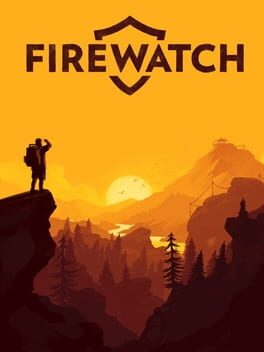
From a visual and atmospheric standpoint, Firewatch boasts one of the most flawless and striking art directions the gaming industry has ever witnessed. Heavily influenced by the legendary graphic designer Olly Moss, the Shoshone National Forest is not rendered with hyper-realistic, gritty textures. Instead, it is presented as a stylized, painterly dreamscape. The color palette is nothing short of breathtaking. The vibrant, golden oranges and deep purples that flood the canyons as the sun sets, giving way to the cool, pastel blues of the early morning dawn, create a sense of indescribable, melancholic peace.
Furthermore, the game refuses to hold your hand. There is no magical glowing arrow on the screen telling you where to go, nor is there a convenient mini-map rotating in the corner of your HUD. Instead, you are given a physical paper map and a compass. To navigate the dense, winding trails of the forest, you must actually read the topography, triangulate your position using landmarks like a specific rock formation or a dried-up riverbed, and orient yourself physically. This "old-school" navigation mechanic forces you to pay attention to your surroundings, deepening your connection to the wilderness and making you feel like a true resident of the forest.
As the summer progresses and the narrative shifts into its second half, this peaceful, introspective retreat slowly morphs into a tense, deeply unsettling psychological thriller. You begin to find evidence that you are not alone in the woods. Your tower is ransacked. You find transcripts of your private conversations with Delilah. You spot a mysterious figure watching you from a ridge in the dead of night. Paranoia sets in. You witness firsthand how Henry and Delilah’s minds, isolated and desperate, begin to feed off one another, fabricating massive, terrifying conspiracy theories about government experiments or corporate espionage.
However, Firewatch is not interested in delivering a Hollywood-style, explosive climax with a monstrous villain or a grand conspiracy. The game’s finale has been criticized by some players as being "anti-climactic" or "deflating," but that criticism completely misses the thematic point of the entire journey. Life is not a grand thriller. There is no magical conspiracy to give your suffering meaning. When the summer ends and the massive fire finally forces you to evacuate the forest, the illusion shatters. No matter how far you ran, no matter how deep into the fantasy you and Delilah descended, the real world is still waiting for you. Henry still has to go back down the mountain, face his dying wife, and deal with his shattered life. Firewatch is a haunting, beautiful meditation on the impossibility of running away from your problems, delivered through the howling of the wind and the crackle of a lonely radio. It is an unforgettable emotional experience.