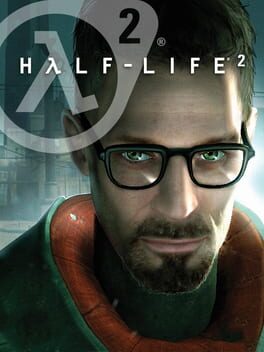
Half-Life 2 (2004): The Gravity of Rebellion and the Masterclass of Interactive Dystopia
There are video games that are wildly successful, there are games that are highly influential, and then there is Half-Life 2. When Valve Corporation released this monolithic sequel in the winter of 2004, following years of intense anticipation and a highly publicized source code leak, it did not merely iterate upon the First-Person Shooter (FPS) genre; it shattered it, melted it down, and completely reforged it into a shape that the industry had never seen before. In many ways, the entire gaming industry has been trying to replicate its magic ever since. If the original 1998 Half-Life proved that you could tell a cohesive, unbroken story without pulling the camera away from the player's eyes, Half-Life 2 proved that a video game world could feel entirely, terrifyingly, and physically real. It introduced a proprietary physics engine (the Source engine) that transformed the environment from a static, painted backdrop into an active, tactile weapon. But beyond its monumental technical achievements, Half-Life 2 remains an unparalleled literary achievement in environmental storytelling, pacing, and dystopian world-building. It is a bleak, Orwellian masterpiece that explores the subjugation of the human race, the spark of rebellion, and the immense, unspoken weight carried by a silent savior.
The brilliance of the game’s narrative begins with its steadfast refusal to use cutscenes. You, playing as the legendary, mute theoretical physicist Gordon Freeman, are never pulled out of your own body; you experience every single moment through his eyes. The game begins with an awakening from a mysterious, years-long stasis, orchestrated by the enigmatic, suit-clad, extra-dimensional bureaucrat known as the G-Man. With a raspy, haunting voice, he utters the immortal words: 'The right man in the wrong place can make all the difference in the world. So, wake up, Mister Freeman. Wake up and smell the ashes.' You materialize on a grimy, sterile train arriving in City 17, an unspecified Eastern European metropolis. The sheer atmosphere of oppression in those first fifteen minutes is suffocating and masterfully crafted. You are no longer on Earth as you knew it; you are in a totalitarian nightmare ruled by the Combine, a multi-dimensional alien empire that conquered the planet in a mere seven hours. Giant video screens broadcast the hypocritical, soothing propaganda of humanity's sell-out administrator, Dr. Wallace Breen. Heavily armored, faceless Metrocops beat civilians with stun batons. The towering, monolithic, impossibly tall Citadel pierces the sky, a constant, looming reminder of alien dominance.
Valve's mastery of environmental storytelling shines brightest in this bleak setting. The game doesn't need a character to explicitly tell you that humanity is dying; instead, you walk past a playground where a rusted swing creaks in the wind, entirely devoid of children. You later learn of the Combine's 'Suppression Field,' a devastating technological barrier that prevents human reproduction. Every rusted car, every piece of faded graffiti, every exhausted sigh from a citizen in a ragged blue jumpsuit paints a vivid, heartbreaking picture of a species standing on the brink of extinction. The psychological subjugation is perfectly encapsulated in the famous early encounter where a Metrocop knocks a soda can off a trash bin and orders you: 'Pick up that can.' You can choose to obey and place it in the trash, submitting to the regime, or you can throw it at the cop’s masked face and run. In that singular micro-interaction, the game establishes the core theme of the entire journey: compliance versus defiance.
Mechanically, the game is a masterclass in pacing, constantly reinventing itself chapter by chapter to ensure the player is perpetually engaged. What starts as an unarmed escape across rooftops turns into a high-speed hovercraft chase through radioactive canals, which then seamlessly transitions into a harrowing survival-horror segment in the legendary chapter 'We Don't Go To Ravenholm.' This ghost town, infested with parasitic headcrabs and howling zombies, introduces the eccentric, shotgun-wielding Father Grigori, who laughs maniacally as he sets traps for his mutated flock. It is here that the game fully trains you to use its crowning achievement: the Zero-Point Energy Field Manipulator, universally known as the Gravity Gun. This tool completely changed the paradigm of combat. You didn't just shoot bullets; you pulled circular sawblades out of walls and launched them through zombies, you grabbed explosive barrels mid-air and hurled them back at enemies, you used heavy radiators as improvised shields. The environment itself became your greatest ammunition, making the player feel like a true physicist manipulating the laws of mass and velocity.
Furthermore, Half-Life 2 revolutionized the concept of the NPC companion with the introduction of Alyx Vance. In an era where escorting an AI character was universally despised by gamers due to terrible pathfinding and annoying dialogue, Alyx emerged as an absolute revelation. She was capable, intelligent, emotionally expressive (thanks to groundbreaking facial animations), and deeply human. She wasn't a damsel in distress to be rescued; she was a partner, the emotional anchor that grounded the silent Gordon Freeman to the horrific reality of the world. As you fight alongside her, navigating the antlion-infested beaches of Highway 17 and breaching the terrifying prison of Nova Prospekt, you genuinely care for her survival. Her presence humanizes the resistance, giving you a tangible reason to fight back against the Combine empire.
The climax of the game, a full-scale urban uprising in the war-torn streets of City 17, is an adrenaline-fueled symphony of chaos. Striders—massive, three-legged biomechanical horrors—tear through buildings while citizens, inspired by your return, take up arms and follow you into the fire. The eventual ascent into the dark, sterile, terrifyingly alien geometry of the Citadel strips you of all your conventional weapons, supercharging the Gravity Gun and allowing you to violently tear the Combine soldiers apart with their own architecture in an ultimate power fantasy. Yet, despite your apparent victory, the game ends exactly as it began: with the sudden, reality-bending intervention of the G-Man. He freezes time at the moment of a massive explosion, congratulates you on a job well done, and places you back into stasis, waiting for his next 'assignment.'
Half-Life 2 leaves you with a haunting philosophical realization: you may have sparked a global revolution, you may have toppled a dictator, but in the grand cosmic scheme, you are still nothing more than a pawn in a much larger, incomprehensible game. It is a narrative and mechanical triumph that has echoed through the decades, a towering Citadel of design that casts a long, unyielding shadow over every single game that has dared to follow in its footsteps.