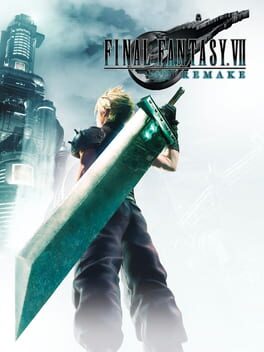
Final Fantasy VII Remake — Nostalgia Reborn, Reimagined, Reinvented
Final Fantasy VII Remake is the most audacious act of nostalgia in gaming history. Rather than delivering a straightforward graphical update of the 1997 classic, Square Enix chose to completely reimagine the Midgar section of the original game — expanding roughly five hours of content into a full, standalone 40-hour experience. The result is a game that simultaneously honors its source material and boldly subverts it, creating something that feels both achingly familiar and thrillingly new.
The combat system is a masterful hybrid of action and strategic RPG mechanics. Cloud's real-time sword combat flows smoothly, with each character playing distinctly — Tifa's martial arts combos, Barret's ranged suppressive fire, and Aerith's magic-focused support. The ATB gauge fills through combat actions, allowing you to pause time and select spells, abilities, and items in a tactical overlay. On Hard difficulty, where MP does not regenerate between encounters, this system reveals a surprising strategic depth that rewards careful preparation and intimate knowledge of enemy weaknesses.
The expanded characterization is the remake's greatest triumph. Characters who were sketches in the original — like Jesse, Biggs, and Wedge of the Avalanche resistance — are fleshed out into fully realized individuals with backstories, dreams, and fears. The relationship between Cloud and Aerith is given room to breathe and develop naturally, making the emotional stakes of their shared destiny even more devastating for players who know what lies ahead.
Midgar, rendered in extraordinary detail, transforms from a series of static backgrounds into a living, breathing city of startling scale and variety. The slums beneath the plates pulse with desperate energy, while the upper city gleams with corporate affluence. Wall Market, reimagined as a vibrant entertainment district, is a particular highlight, culminating in a show-stopping sequence that must be seen to be believed.
The soundtrack, reimagined by Nobuo Uematsu and a team of talented composers, is a remarkable achievement that pays homage to the original while bringing each track into the modern era. Hearing the iconic battle theme, Aerith's Theme, and the menacing Shinra Corporation motif rendered with full orchestral power creates an overwhelming sense of nostalgic grandeur. The dynamic music system, which seamlessly transitions between exploration and combat arrangements, ensures that the score always matches the emotional temperature of each scene.
The Materia system, simplified from the original but still substantial, provides satisfying character customization. Each character's unique abilities — Cloud's Punisher mode, Tifa's martial arts stagger combos, Aerith's devastating magic — encourage constant party switching and tactical experimentation. The Summon Materia system, which calls forth spectacular allies like Ifrit, Shiva, and Bahamut during extended battles, provides visually stunning climactic moments that reward patient play.
The world-building through side quests and NPC interactions fleshes out the everyday lives of Midgar's residents in ways the original could only hint at. From helping a local merchant source ingredients for his struggling restaurant to uncovering the dark secrets of Shinra's experimental facilities, these optional activities create a portrait of a city under corporate tyranny that feels disturbingly plausible.
The Colosseum battles and VR Missions provide substantial combat challenges that test mastery of the game's systems. The Pride and Joy Prototype superboss, accessible only after completing all VR challenges on Hard difficulty, serves as the ultimate test of player skill and party optimization. The Stagger system, which rewards sustained pressure and precise ability timing with devastating damage windows, adds a layer of strategic depth to combat that becomes essential in Hard Mode's unforgiving encounters.
The orchestral soundtrack, recorded with live musicians, elevates every moment with compositions that range from intimate piano solos during quiet character moments to thunderous brass during combat encounters. The integration of Nobuo Uematsu's original themes with Masashi Hamauzu's new compositions creates a musical landscape that honors the legacy while establishing its own identity. The Wall Market theme, reimagined as a big-band jazz number, and the haunting Aerith's Theme arrangements demonstrate remarkable range and emotional sensitivity.
The side quest design transforms optional content from typical RPG busywork into meaningful narrative vignettes that deepen the player's connection to Midgar's residents. Each side quest explores the lives of ordinary citizens affected by Shinra's corporate dominance, from orphaned children finding surrogate families to disillusioned soldiers questioning their loyalties. These stories humanize the political struggle at the game's core, ensuring that Cloud's fight against Shinra feels motivated by genuine compassion for specific individuals rather than abstract ideological opposition.
The Materia system's reimagining preserves the original's strategic depth while integrating seamlessly with the real-time combat. Equipping elemental, support, and command Materia to weapon and armor slots creates build customization that profoundly affects combat approach. The synergy between linked Materia — combining Elemental with Fire to imbue weapons with flame damage, or pairing Magnify with Healing to create area-of-effect cures — rewards experimentation and strategic planning. The AP progression system, which levels Materia through combat use, creates satisfying long-term investment in specific loadout configurations.
Final Fantasy VII Remake is a stunning achievement that proves classic games can be reimagined with ambition, artistry, and genuine love for the source material. It is the beginning of a new saga, built on the foundation of one of gaming's most beloved stories, and it leaves you desperate for more.
The environmental design of Midgar's sectors reveals remarkable attention to social stratification and world-building. The contrast between the gleaming Shinra headquarters and the desperate poverty of the Sector 5 slums speaks volumes about the game's anti-corporate themes. The collapsed Sector 7 plate, the haunted Train Graveyard, and the eerily beautiful Aerith's garden each create distinct atmospheric experiences that enrich the game's emotional vocabulary far beyond what the original's pre-rendered backgrounds could convey.
Final Fantasy VII Remake is a game about defying fate — both literally, within its narrative, and metaphorically, as a creative work. It proves that remakes can be acts of genuine artistic vision rather than simple nostalgia plays. It is a triumphant, emotionally generous experience that honors the past while boldly stepping into the future.