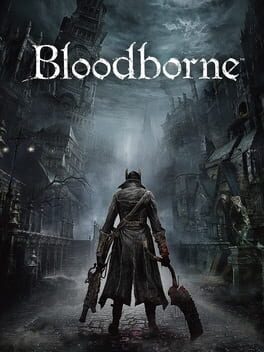
Bloodborne (2015): A Macabre Descent into Gothic Madness and Cosmic Despair
In the vast and ever-expanding pantheon of video game history, there exists a very specific, uncompromising lineage of interactive torment that challenges the player's resolve, forcing them to confront their own psychological limitations and deep-seated fears. Hidetaka Miyazaki and FromSoftware had already established themselves as the modern masters of this grueling, rewarding philosophy with the legendary Dark Souls series. Yet, in 2015, they took a breathtakingly bold step away from the rusted knights, fading fires, and crumbling castles of dark fantasy, plunging headfirst into a chilling, suffocating, and breathtakingly beautiful nightmare known as Bloodborne. Exclusively gracing the PlayStation 4 at the time, this masterpiece did not merely change the aesthetic dressing of the studio's established formula; it violently ripped out the defensive, cautious heart of their previous games and replaced it with a frenzied, pulsating organ of pure aggression and psychological terror. Bloodborne is a terrifyingly elegant symphony of gore, a Gothic architectural marvel, and ultimately, a harrowing philosophical exploration of humanity's arrogant pursuit of forbidden knowledge, heavily drenched in the cosmic pessimism of H.P. Lovecraft. It is a game that does not just ask you to survive; it asks you to question the very fabric of reality and your own sanity.
From the very moment your nameless 'Hunter' awakens on a blood-stained gurney in the dimly lit Iosefka's Clinic, the game wraps its cold, suffocating fingers around your throat and refuses to let go. You step out into the cursed, sprawling city of Yharnam, a breathtakingly detailed, labyrinthine metropolis dripping with Victorian and Gothic architectural splendor. Spired cathedrals pierce the blood-red moonlit sky, cobblestone streets are slick with rain and viscera, and a heavy, oppressive fog hides horrors beyond human comprehension. Yharnam itself is not merely a passive backdrop; it is the central, tragic character of the narrative. It was a city that found a miraculous substance known as the 'Old Blood' in the ancient, labyrinthine tombs beneath its foundations—a panacea that cured all earthly ailments and elevated the city to unparalleled prosperity and religious fervor. But as is always the case with human hubris, this miraculous cure was a devastating curse. The blood intoxicated the citizens, mutated them, and ultimately brought forth the apocalyptic 'Scourge of the Beast.' The citizens you encounter early on are not mindless, traditional zombies; they are terrified, paranoid men and women holding torches and pitchforks, slowly mutating into the very lycanthropic beasts they are hunting. They scream at you, call you a 'foul beast,' completely unaware that the nightmare has already consumed their own minds and bodies.
The true genius of Bloodborne's narrative, however, lies in its masterful, mid-game genre shift. What begins as a relatively straightforward—albeit terrifying—Gothic horror tale of werewolves, plague, and mad villagers slowly peels back its own diseased skin to reveal a horrifying, mind-bending foundation of Lovecraftian cosmic horror. As you progress through the blood-soaked streets and venture into the forbidden woods and the tragic Byrgenwerth College, you uncover the historic schism between the cautious scholars of the college and the arrogant zealots of the Healing Church. You learn of the 'Great Ones,' god-like, multi-dimensional eldritch entities whose mere existence shatters the fragile human psyche. The game introduces the 'Insight' mechanic—a literal, numerical representation of your character's forbidden knowledge of the cosmos. As your Insight increases by witnessing horrors or consuming items like 'Madman's Knowledge,' you begin to see the world as it truly is. Invisible, towering, multi-eyed monstrosities known as Amygdalas, clinging to the sides of cathedrals, suddenly become visible to you. The game philosophically argues that ignorance is a protective shield; to open 'eyes on the inside' and perceive the cosmos in its true, horrifying grandeur is to invite inescapable, permanent madness.
Mechanically, Bloodborne is an aggressive, adrenaline-fueled dance of death that perfectly mirrors its narrative themes. It violently strips away the heavy wooden and metal shields that players relied upon in Dark Souls. You are instead given a firearm in your left hand, not to inflict massive damage from afar, but to parry—to shoot a lunging beast at the exact perfect millisecond to stagger it, allowing you to tear out its insides in a brutal, visceral 'visceral attack.' Furthermore, the game introduces the 'Rally' system, a mechanic of sheer psychological manipulation. When you take damage, a portion of your health bar turns orange. If you immediately counter-attack and strike the enemy within a few seconds, you bathe in their blood and regain that lost health. This mechanic fundamentally alters the player's psychology. It conditions you to react to pain not by retreating and healing, but by giving in to the bloodlust, throwing caution to the wind, and tearing into your foes with savage desperation. Without realizing it, the game's mechanics turn you, the player, into a blood-drunk hunter, mirroring the exact tragic fate of the beasts you are tasked to slay. You are forced to become the monster to survive the monsters.
The armory of Bloodborne features 'Trick Weapons,' which are triumphs of industrial design and gruesome imagination. A refined, silver cane used for aristocratic walking can be snapped with a flick of the wrist into a serrated, metal whip. A massive, iron cleaver hinges open to become a terrifying, extended executioner's blade. These weapons are extensions of the hunters' shattered psyches—brutal, transforming tools designed for a city that has abandoned the elegance of civilization for the raw butchery of the slaughterhouse. The combat flows like a macabre ballet, fast, frantic, and punishingly precise, demanding absolute focus and rewarding calculated aggression.
The sensory experience of the game is unparalleled in its ability to induce anxiety and awe. The sound design is a cacophony of guttural shrieks, the wet tearing of flesh, and the distant, maddening crying of an unseen infant that echoes through the nightmare realms. And then there is the soundtrack. Composed by a brilliant team of musicians, the score is an orchestral triumph. Unlike the ambient silence of much of the exploration, the boss fights explode into thunderous, operatic crescendos with a live choir chanting in ominous Latin. The melancholic waltz that plays during the fight with Father Gascoigne—a tragic hunter who has lost his mind and murdered his own wife, leaving behind an orphaned daughter—is heartbreaking. But it is the final duel with Gehrman, the First Hunter, set in a serene field of burning white flowers under a colossal, pale moon, that elevates the game to a Shakespearean tragedy. The mournful cellos and soaring choir do not sing of an epic victory; they weep for two broken men locked in a cycle of endless suffering, fighting merely to free the other from the nightmare.
Ultimately, Bloodborne is a magnum opus of dread and atmospheric storytelling. It is a profound exploration of the fragility of the human mind, the terrifying indifference of the cosmos, and the seductive, corrupting nature of power. It leaves its players haunted, their digital clothes soaked in blood, forever remembering the chilling mantra of the Healing Church: 'We are born of the blood, made men by the blood, undone by the blood. Our eyes are yet to open. Fear the old blood.'