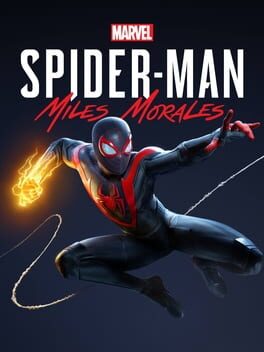
Marvel's Spider-Man: Miles Morales — A Hero Finds His Voice
Marvel's Spider-Man: Miles Morales is proof that bigger is not always better in game design. Where the original Spider-Man was a sprawling, 30-hour epic, Miles Morales is a lean, focused, and deeply personal adventure that tells its story in roughly 10 to 12 hours. And those hours are some of the most emotionally resonant, mechanically satisfying, and visually stunning in the superhero genre. Insomniac Games understands that the strength of a great story often lies in what is left out, not what is added.
Miles's unique abilities set him apart from Peter Parker in profoundly satisfying ways. His Venom powers — bioelectric strikes that can stun, launch, and chain through groups of enemies — add an explosive new dimension to the already excellent combat system. The Camouflage ability, which renders Miles temporarily invisible, opens up stealth approaches that feel distinctly different from Peter's more traditional web-based tactics. Combined with the returning gadgets and suit mods, the combat offers tremendous variety in a compact package.
The story is a coming-of-age tale set against the backdrop of a Harlem winter. Miles must balance his responsibilities as Spider-Man with his grief over his father's death, his relationships with his mother and best friend Ganke, and his cultural identity as an Afro-Latino teenager. The game handles these themes with warmth, specificity, and authenticity, creating a protagonist who feels genuinely distinct from Peter Parker while honoring the shared legacy of the Spider-Man mantle.
Visually, the game is breathtaking. The snow-covered Manhattan, illuminated by Christmas lights and the golden glow of Harlem brownstones, is one of the most atmospheric open worlds in gaming. The ray-traced reflections in puddles, windows, and car hoods create a stunning sense of place. Swinging through the city at sunset, with snow trailing from Miles's suit and the skyline glowing in amber and violet, is a pure moment of superhero fantasy perfected.
The Harlem setting is more than just scenery — it's a character in its own right. The bodega owner who gives Miles a friendly wave, the street musicians playing at the corner, the holiday decorations strung between brownstones — these details create a neighborhood that feels lived-in and worth protecting. The game's portrayal of a tight-knit community rallying together during crisis resonates emotionally in ways that the grander, more abstract threats of other superhero games often miss.
The suit variety and customization options are impressive for a game of this length. Each suit comes with a unique Visor Mod and Suit Mod that alter gameplay in meaningful ways. The Into the Spider-Verse suit, complete with comic-book animation at reduced frame rate, is a particular highlight that demonstrates Insomniac's attention to fan detail. The TRACK suit, the Bodega Cat suit, and the Programmable Matter suit each offer distinct visual identities that encourage experimentation.
The soundtrack blends hip-hop, jazz, and orchestral elements into a score that perfectly captures East Harlem's cultural energy. The original song 'I'm Ready' by Jaden Smith serves as a fitting anthem for Miles's journey of self-discovery. The sound design during web-swinging — the rush of wind, the snap of web lines, the ambient city sounds — creates a sensory experience that makes traversal feel genuinely thrilling even after hours of play.
The Underground faction and Tinkerer storyline provide the narrative's emotional weight through their personal connection to Miles. The revelation of the Tinkerer's true identity transforms a conventional superhero conflict into a deeply personal moral dilemma, forcing Miles to choose between duty and friendship. This intimate scale of villainy — where the antagonist's motivations are entirely understandable and sympathetic — creates more emotional complexity than many superhero narratives with world-ending stakes.
The New Game Plus mode and Ultimate difficulty provide compelling reasons to revisit Miles's story after completion. The additional challenge of Ultimate difficulty, combined with the ability to carry over all unlocked suits and upgrades, transforms familiar encounters into demanding tactical puzzles. The collectible Sound Samples, time capsules, and training challenges provide optional content that rewards thorough exploration without overwhelming the core narrative experience.
Miles Morales is a masterclass in focused game design. It does not pad its runtime with unnecessary content; every mission, every side activity, and every collectible serves the story or the character development. It is a game that respects the player's time while delivering an emotional punch that lingers long after the credits roll.
The Photo Mode, implemented with exceptional sophistication, has made Miles Morales one of the most-captured games on PlayStation. The combination of the game's stunning visual fidelity, the expressive character animation, and the atmospheric New York City setting creates a virtually limitless canvas for digital photography. Community photo contests and shared galleries have extended the game's cultural impact well beyond its gameplay, turning Miles Morales into a platform for artistic expression that celebrates both the character and the city he protects.
The New Game Plus mode and Ultimate difficulty provide substantial replay incentives for players who want to experience Miles's story with full access to his evolved ability set. The satisfaction of replaying early encounters with a complete arsenal of Venom powers and Camouflage abilities transforms battles that were initially challenging into power-fantasy spectacles that celebrate the player's mastery. The additional suits unlocked through NG+ completion, each with distinctive visual designs and associated Visor modifications, provide collectible motivation for dedicated fans.
The Into the Spider-Verse suit, rendered with a lower frame rate to emulate the film's distinctive animation style, demonstrates Insomniac's extraordinary attention to detail and their respect for Miles Morales's multimedia legacy. The comic-book-style impact text that appears during combat while wearing this suit transforms ordinary encounters into dynamic visual spectacles that honor the character's cross-media identity. This single cosmetic addition encapsulates the studio's approach to the entire project: technically ambitious, creatively respectful, and designed with genuine love for the source material.
Spider-Man: Miles Morales is proof that a focused, tightly designed experience can be just as impactful as a sprawling epic. It is a game that punches well above its weight class, delivering a deeply personal story in a spectacular package.