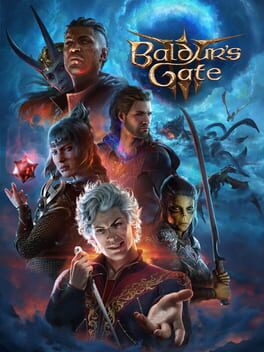
Baldur's Gate 3 — The New Gold Standard for CRPGs
Baldur's Gate 3 is not merely a worthy successor to its legendary namesake — it is a quantum leap forward for the computer role-playing game genre. Larian Studios, building on the foundation laid by their Divinity: Original Sin series, has delivered a game of almost impossible scope, where virtually every decision, every spoken word, and every combat encounter can ripple outward in ways that feel genuinely organic and surprising. The fact that this game exists in the form it does feels like a miracle of modern game development.
Built faithfully on the Dungeons & Dragons 5th Edition ruleset, the game's systems are a joy to engage with. Every skill check, every saving throw, and every attack roll carries the delicious tension of tabletop gaming, amplified by stunning cinematic presentation. The sheer number of ways to approach any given problem is staggering. You can talk your way past a guard with a Charisma check, pickpocket the key from his belt, find an alternate entrance through the sewers, or simply blast the door down with a Fireball. The game not only accommodates all of these approaches but often reacts to them in unique, hand-crafted ways.
The companion characters in Baldur's Gate 3 are among the best ever written. Shadowheart, Astarion, Lae'zel, Gale, Wyll, and Karlach are not just party members — they are fully realized individuals with their own goals, traumas, secrets, and growth arcs. Your relationship with each of them evolves based on your actions throughout the game, leading to moments of genuine connection, conflict, and occasionally heartbreak. The romance options are handled with a maturity and emotional intelligence that sets a new standard for the industry.
Visually, the game is a feast. The environments range from the sunlit forests of the Emerald Grove to the nightmarish depths of the Underdark, each rendered with meticulous attention to detail. The lighting is particularly impressive, with dynamic shadows and volumetric fog creating atmosphere that elevates every scene. The character models are expressive and detailed, making the game's many dialogue-heavy sequences a pleasure to watch and engage with.
The multiplayer component elevates the experience even further. Up to four players can experience the entire campaign together, each controlling their own character with independent dialogue choices and narrative agency. The potential for creative chaos — one player secretly betraying the party, another pursuing a romance that conflicts with the group's goals, a third making a critical skill check that changes the course of the story — creates dynamic, unpredictable sessions that capture the improvisational magic of tabletop D&D in a way no other video game has achieved. The Dungeon Master-like flexibility that the game offers to cooperative groups is nothing short of revolutionary.
The combat encounter design deserves particular praise. Each major battle is a handcrafted tactical puzzle that rewards creative problem-solving. The fight against the goblin war camp offers dozens of approach vectors — diplomacy, stealth, environmental manipulation, or direct assault. The battle atop the Moonrise Towers requires managing multiple objectives simultaneously. The Honour Mode, added post-launch, further elevates the tactical challenge by introducing modified boss mechanics and permadeath, providing a compelling endgame challenge for experienced players.
The reactivity of the world to player choices is unparalleled. Decisions made in Act 1 ripple forward through Acts 2 and 3 in ways that feel genuinely organic. Saving or condemning a particular NPC might open or close entire questlines hours later. The game tracks an astonishing number of variables, creating playthroughs that feel meaningfully different from one another. The community's discovery of hidden interactions, secret dialogue options, and obscure consequences continues months after launch, revealing new layers of depth with each revelation.
The game's approach to mature themes — including trauma, addiction, identity, and consent — is handled with remarkable sophistication. The Dark Urge origin, which places players in the role of a character battling violent intrusive thoughts, is a particularly bold narrative experiment that explores the nature of free will and personal responsibility. The romance options include some of the most nuanced and emotionally complex relationship arcs in gaming, treating intimacy not as a reward mechanic but as a genuine expression of character development.
The modding community and Larian's post-launch support have further enriched the experience. Patch updates have added new epilogues, additional dialogue, and quality-of-life improvements based on community feedback. The game's engine allows for extensive modding, from cosmetic changes to entirely new subclasses and story content, ensuring that the game continues to evolve well beyond its initial release.
Baldur's Gate 3 is a masterpiece that proves the CRPG is not a relic of the past but a vital, evolving form of interactive art. It is a love letter to tabletop gaming, a showcase for modern game technology, and above all, a deeply human story about identity, freedom, and the choices that define us. Every gamer owes it to themselves to experience this extraordinary achievement.