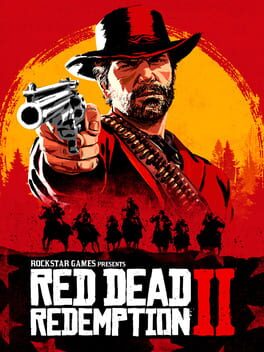
Red Dead Redemption 2 — A Requiem for the American Frontier
When we turn the pages of video game history, we witness that some titles transcend being mere digital entertainment and transform into literary masterpieces, poignant cinematic works, and interactive marvels. Released in 2018 by Rockstar Games, Red Dead Redemption 2 is perhaps the most magnificent, most colossal, and most flawless example of this rare transformation. The product of years of superhuman effort, countless sleepless nights by thousands of developers, and a jaw-dropping budget, this production is not merely an open-world action game — it is a monumental elegy written about the dark side of the American dream, the merciless beauty of the wilderness, and one man's confrontation with the demons within his own soul. From the very first moment you pick up the controller, the game makes you feel, like a slap to the face, that it will not offer you an ordinary heroic fantasy. Instead, it forces you to slow down, to think, and to survive in that unforgiving landscape where the wind howls and the snow is knee-deep.
Our story begins in 1899 America, an era when the Wild West is drawing its last breath and lawmen alongside merciless Pinkerton detectives are relentlessly hunting the remaining outlaw gangs. We control Arthur Morgan, a senior member of the Van der Linde gang — a group that refuses to adapt to this changing world, tries to live by its own rules, and finds itself trapped within an ever-tightening circle. After a botched robbery in Blackwater that leaves a bloody wreckage behind, the gang members are forced to flee into the freezing mountains of Ambarino to survive. These first hours are deliberately slow, deliberately bleak, and hopeless. Hunger, the biting cold, and the paranoia created by the pursuing lawmen descend upon the gang like a nightmare. In this age where civilization and law have spread like an octopus across the entire continent, 'freedom' for our protagonists has become synonymous with nothing more than perpetual flight.
The game's undisputed greatest achievement is the layered, contradiction-filled, and profoundly human character development of our protagonist, Arthur Morgan. At first glance, Arthur appears to be a rough, thoughtless enforcer who unquestioningly carries out the orders of the gang's charismatic leader, Dutch van der Linde. But as the game progresses — as you read the naive notes he scrawls in his personal journal, admire the beautiful charcoal sketches he draws, and witness his interactions with those around him — you discover that beneath this tough exterior lies a man who is fragile, tormented by the regrets of his past, and possessed of a philosophical depth. Arthur is no hero; he is an outlaw whose hands are stained with the blood of innocents, who has destroyed countless families, and who has embraced violence as a native language. Yet that faint spark of goodness within him grows more visible as the world around him rots. The honor system is not merely a gameplay mechanic — it is a philosophical element that changes the animal Arthur sees in his visions and the words he writes in his journal.
On the other end of Arthur's inner journey stands Dutch van der Linde, the gang's father, leader, and ideologue. Dutch is initially an incredibly charismatic romantic visionary, capable of swaying masses with his words and promising his gang a fair and free world. His phrase 'I have a plan' begins as a symbol of hope but gradually transforms into a hollow echo, a symbol of desperation and paranoia. Rockstar crafts Dutch's slow descent into madness and the transformation of his ideals into toxic arrogance with such mastery that watching this collapse feels like witnessing one of the heaviest dramas ever staged. The gang is not just a criminal organization; it is a twisted family of outcasts, losers, and those who could not hold on. Walking around the camp and listening to this 'family's' daily dialogues, joining the mournful songs sung around the fire in the evenings, elevates the bond you form with these characters to an incredible level — until that family is torn apart by lies, betrayals, and the relentless pressure of the outside world.
Red Dead Redemption 2's open world is, in the truest sense, a massive living organism that breathes on its own. Even when you are doing nothing, the world continues to turn in its own cycle. From Lemoyne's oppressive, fly-infested, alligator-prowling treacherous swamps to the cobblestone, smoke-choked streets of Saint Denis reflecting the industrial revolution's filth and corruption; from Valentine's mud-drowned roads to the vast, verdant plains of New Hanover — every square meter has been designed with obsessive attention to detail. While wandering the forest, you might see a bear catching fish from a river, witness two deer locking antlers in combat, or watch an eagle suddenly swoop down from a treetop to snatch a rabbit. This incredible ecosystem makes the player feel unmistakably that this world is not a synthetic playground revolving solely around them, but rather that they are merely a tiny part of this magnificent natural tapestry.
The gameplay mechanics and pacing are a deliberate act of rebellion against today's impatient, hyperactive gaming audience. Everything in the game has a weight, a time cost, and a physical consequence. When Arthur opens a drawer, the animation doesn't instantly cut — he reaches out, pulls the drawer, examines each can inside individually, and puts them into his bag. You must regularly clean your weapons or they may jam during the most critical gunfight. Your clothes get dirty when you roll in the mud, your character weakens if you don't eat, and your hair and beard grow in real time. This 'conscious heaviness,' while initially tedious for some players, is actually a magnificent trap set by Rockstar to pull you into the reality of that era. Once you accept that weight, everyday actions like grooming your horse, brewing morning coffee, and cooking meat over a campfire transform into the game's most peaceful rituals.
In terms of visual and audio design, this production is a tour de force that pushes the boundaries of the gaming industry. The beams of light filtering through the morning mist, the lightning illuminating the world momentarily during a stormy night, or the deep footprints you leave in the snow resemble living oil paintings. The sound design and music inject the game's soul directly into your heart. Woody Jackson's legendary compositions dynamically shift according to the situation and location, keeping the atmosphere perpetually alive. Especially during the game's emotional peaks — D'Angelo's 'Unshaken' suddenly cutting in as Arthur rides his horse, or 'That's The Way It Is' near the game's conclusion making it impossible to hold back your tears — these moments create an emotional flood more powerful than even cinema's most striking scenes.
Ultimately, Red Dead Redemption 2 is not a casual entertainment product that appeals to everyone; it is a solemn period drama aimed at adults that demands patience, time, and emotional investment. After you finish playing it, even months or years later, it remains an unparalleled experience that takes up permanent residence in your mind — one that brings Arthur Morgan's tired but peaceful smile to your thoughts whenever you see a landscape or hear a melancholic melody. That final breath taken against the setting sun has already been etched into the golden pages of video game history, never to be erased.