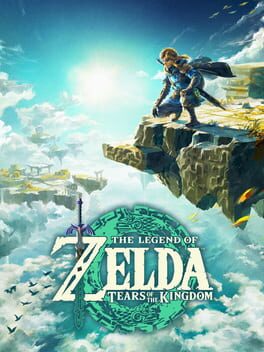
The Legend of Zelda: Tears of the Kingdom — Creativity Unbound
Tears of the Kingdom is the rarest of things: a sequel that fundamentally reinvents its predecessor while building on everything that made it special. Breath of the Wild redefined what an open-world game could be by trusting the player with unprecedented freedom. Tears of the Kingdom goes further, asking: what if the player could also reshape the world itself? The answer comes in the form of Ultrahand and Fuse, two abilities that transform every object in Hyrule into a potential tool, weapon, or vehicle.
The Ultrahand ability, which allows Link to grab, rotate, and attach objects together, is a sandbox of pure creative joy. Players have built flying machines, tanks, battle mechs, roller coasters, and solutions to puzzles that the developers clearly never imagined. The physics engine that supports this system is a technical triumph on hardware that, by modern standards, is severely limited. The fact that the Nintendo Switch can render these complex constructions in real-time without significant performance issues is nothing short of miraculous engineering.
The world itself has been dramatically expanded in three dimensions. The Sky Islands — floating landmasses scattered across the heavens — add a vertical dimension to exploration that creates breathtaking moments of discovery. Diving from a sky island, free-falling through the cloud layer, and landing precisely on a point of interest far below never gets old. The Depths, a massive underground cavern system that mirrors the surface world in shadow and darkness, adds another entirely new layer of exploration. The sheer volume of content is staggering.
The shrines and dungeons represent a significant evolution from Breath of the Wild. The four major temples — Wind, Water, Fire, and Lightning — offer more structured, narrative-driven experiences than their predecessor's Divine Beasts, with proper boss encounters and thematic coherence. The shrines, redesigned around the new abilities, offer consistently clever and rewarding puzzles that showcase the extraordinary flexibility of the game's physics systems.
The narrative ambition of Tears of the Kingdom significantly exceeds its predecessor. The Memories, accessed through geoglyphs scattered across Hyrule, reveal the ancient story of Rauru, Sonia, and the Demon King Ganondorf in a sequence of dramatic flashbacks that provide genuine emotional weight to the conflict. Ganondorf, voiced with menacing authority by Matthew Mercer, is given a physical presence and personality that the more abstract Calamity Ganon of Breath of the Wild lacked entirely. The Zonai civilization and its technological legacy provide a fascinating layer of world-building that recontextualizes many of Hyrule's familiar landmarks.
The Depths represent one of the most ambitious additions to an open-world game. This vast underground realm, equal in size to the entire surface map, is shrouded in darkness and populated by unique enemies, resources, and challenges. The lightroot system, which mirrors the surface shrine locations, creates a compelling parallel between the world above and below. The Depths' oppressive atmosphere — the darkness, the Gloom that saps your maximum health, the distant glow of unknown hazards — provides a thrilling contrast to the bright, cheerful surface exploration.
The build system occasionally produces moments of genuine emergent comedy. Players have attached Korok characters to elaborate torture devices, built hover-bikes from fans and steering sticks that trivialize traversal, constructed catapults that launch bombs across entire valleys, and designed combat mechs that auto-target enemies. The game's physics engine handles these creations with remarkable stability, and the developer's obvious delight in players' creative solutions is evident from the game's generous design tolerances.
The Depths, an entirely separate underground world accessible through chasms scattered across the surface, doubles the game's explorable area with a hauntingly atmospheric dark realm. Navigating the pitch-black Depths requires strategic use of Brightbloom Seeds and careful resource management, creating a survival-horror atmosphere that contrasts sharply with the sun-drenched surface world. The discovery of Lightroots — which mirror Surface shrines in their placement — creates a cartographic puzzle that rewards players who pay attention to the relationship between the two realms.
The vehicle and construction possibilities enabled by Ultrahand and Zonai devices have spawned an engineering community of remarkable creativity. Players have built functioning tanks, flying machines, walking mechs, perpetual motion devices, and even musical instruments using the game's physics engine. The fact that these creations work according to consistent, predictable physical rules rather than scripted animations speaks to the extraordinary sophistication of the game's underlying systems.
Tears of the Kingdom is a masterpiece of game design that celebrates human creativity and the boundless potential of player-driven exploration. It is a game where the only limit is your imagination, delivered with the extraordinary polish, charm, and attention to detail that only Nintendo can provide. It is a joyful, generous, endlessly surprising experience that represents the very best of what the medium of video games can be.
It seemed absolutely impossible to fundamentally improve upon the industry-shattering paradigm shift of Breath of the Wild, but Tears of the Kingdom achieved the unthinkable by boldly introducing the revolutionary, game-changing Ultrahand mechanic. By incredibly empowering the player to literally attach any environmental object to another, Nintendo effectively transformed the vast, sweeping kingdom of Hyrule into a staggering, unbridled engineering sandbox of limitless potential. The sheer, terrifying audacity of the game’s deeply complex, robust physics engine is a monumental technical marvel that completely puts other massive open-world titles to absolute shame. Whether you are painstakingly constructing an incredibly complex, laser-guided bomber plane, building a massive mobile death-fortress to completely annihilate a Bokoblin camp, or simply awkwardly gluing three massive logs together just to quickly cross a raging river, the game consistently, brilliantly rewards pure human creativity over rote, memorized skill. It is an unbelievable, generation-defining masterpiece that proves exactly why Nintendo remains the undisputed champion of pure, joyful game design.