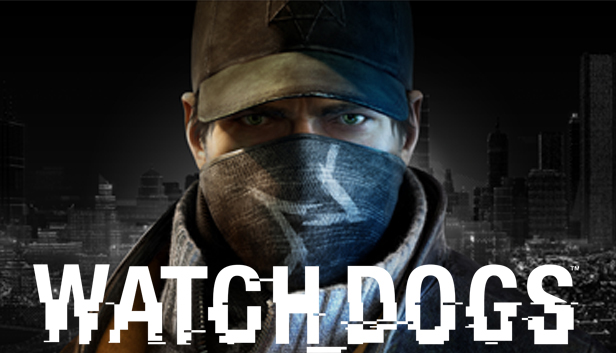
Watch Dogs — The Digital Panopticon and the Vigilante in the Rain
When we talk about Watch Dogs, we inevitably have to talk about the ghost of its own marketing. The infamous E3 2012 reveal remains one of the most jaw-dropping moments in video game history—a vertical slice of a moody, rain-slicked, hyper-connected Chicago that promised a true "next-generation" experience. While the final product released in 2014 was heavily criticized for graphical downgrades and failing to meet those impossible, sky-high expectations, viewing the game solely through the lens of broken promises is a massive injustice. If you strip away the industry politics and the burden of its hype, Watch Dogs stands as a remarkably ambitious, prophetically dark, and mechanically brilliant piece of cyberpunk fiction that laid the crucial foundation for an entire franchise. It is a game that asked us to look at the glowing rectangles in our pockets and realize that they are not just communication devices; in the modern world, they are the ultimate weapons.
The narrative thrusts us into the heavy, trench-coated shoulders of Aiden Pearce. Often dismissed by superficial critiques as a bland, generic, angry white male protagonist, a deeper dive into Aiden’s psyche reveals a profoundly tragic, fundamentally broken human being. He is not a superhero, nor is he a particularly good man. He is a highly skilled "fixer" and hacker whose hubris during a digital heist led directly to the assassination of his young niece, Lena. Driven by a suffocating, all-consuming grief and an unquenchable thirst for revenge, Aiden transforms himself into "The Fox," a vigilante dispensing his own ruthless brand of justice. He is a modern-day digital Batman, but one without the strict moral code against killing. His journey through Chicago’s criminal underworld is grim, isolating, and soaked in moral ambiguity. The game does not ask you to love Aiden; it asks you to understand the terrifying lengths a man will go to when he is hollowed out by guilt.
The true star of the game, however, is not Aiden, but the city of Chicago and its central operating system: ctOS. This pervasive network connects every security camera, every traffic light, every power grid, and the personal data of every single citizen. Through Aiden’s heavily modified smartphone, this omnipotent network becomes the player’s ultimate playground. The core mechanic of "hacking on the fly" was revolutionary. The ability to manipulate the environment during a high-speed car chase or a frantic gunfight fundamentally changed the way we interacted with open-world games. You are not just shooting your way out of problems; you are orchestrating chaos. Triggering a traffic light to turn green at an intersection to cause a massive, multi-car pileup that traps your pursuers; raising security bollards just in time to obliterate a police cruiser tailing you; or exploding underground steam pipes to launch enemy vehicles into the air—the sheer kinetic joy of these environmental takedowns never, ever gets old. It makes you feel like an omniscient god of the digital age.
Then there is the Profiler. This single mechanic is perhaps the most brilliant narrative tool Ubisoft ever created. With the press of a button, Aiden’s phone scans the crowds of NPCs walking the streets, instantly pulling up their names, occupations, incomes, and a brief, deeply personal fact about their lives. Suddenly, the faceless digital mannequins populating the open world become chillingly real. You might aim your gun at a gang member, only to read that he is a "Recent Bone Marrow Donor." You might be about to steal a car from a woman, only to see her profile reads "Struggling to pay for daughter's cancer treatment." You might hack an ATM to steal funds from a passing businessman, only to discover he is a "Veterans Charity Organizer." The Profiler constantly forces the player into micro-moral dilemmas. It breaks the fourth wall of typical video game sociopathy, reminding you that in an era of absolute surveillance, every single person has a story, a secret, or a tragedy. It makes the world feel incredibly, sometimes uncomfortably, alive.
When the digital trickery fails and the bullets start flying, Watch Dogs delivers a surprisingly robust, visceral, and deeply satisfying combat system. The gunplay is heavy, loud, and impactful. Aiden moves with a specific, lethal fluidity that feels heavily inspired by cinematic "Gun-Fu" sequences seen in movies like John Wick. He snaps in and out of cover with practiced efficiency, and his brutal, baton-wielding melee takedowns are incredibly satisfying. The game shines brightest when you blend hacking with stealth and combat. Sneaking into a heavily fortified gang hideout by hijacking their own security cameras, tagging all the enemies, remotely detonating the grenades clipped to their belts, dropping a forklift on a heavily armored guard, and then walking into the compound to casually execute the terrified survivors feels empowering in a deeply sinister way. The crowning mechanic, the "Blackout," which plunges an entire city block into pitch-black darkness while you slip away into the shadows, remains one of the most visually and mechanically stunning moments in modern gaming.
Finally, we must acknowledge the sheer paranoia induced by the game’s seamless multiplayer integration. At any given moment while exploring the single-player world, you could suddenly be notified that another real-world player has invaded your game and is actively hacking your phone to steal your data. Your world suddenly becomes a tense game of cat-and-mouse. Every pedestrian behavior is scrutinized—why did that NPC jog across the street? Why did that car suddenly brake? The adrenaline rush of spotting the human player desperately trying to blend into the AI crowd, drawing your weapon, and engaging in a chaotic chase through the back alleys of Chicago is an unmatched multiplayer thrill. Watch Dogs is a flawed masterpiece, a misunderstood pioneer that dared to show us the terrifying reality of our hyper-connected future. It is a dark, brooding, and mechanically ingenious sandbox that absolutely demands to be played and respected for the massive risks it took.