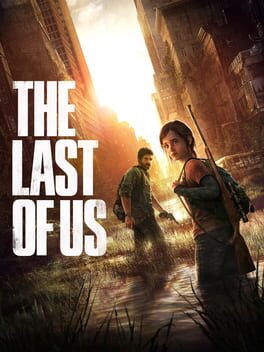
The Last of Us — Love, Selfishness, and the Art of Survival in a Collapsed World
The debate over whether video games qualify as an art form has surfaced on countless platforms for decades, dividing critics and players alike. Yet in 2013, Naughty Dog's The Last of Us placed a definitive period at the end of that argument — a production that screamed to the entire world: 'Yes, video games are not just entertaining toys; they are works of art powerful enough to shatter the human soul.' Taking the zombie apocalypse — a theme that had been wrung dry by countless films, series, and books until it could seemingly offer nothing new — and transforming it into a striking drama that examines the darkest, most selfish, yet also most loving aspects of human nature is, in a word, a work of supreme craftsmanship.
The game's famous, gut-wrenching opening sequence — one so powerful it puts cinema history to shame — is the clearest preview of the unsentimental yet merciless journey that awaits us. On the first night of the outbreak, amid the chaos, the screams, and the flames, you feel in your very bones young, hopeful, loving father Joel carrying his daughter Sarah in his arms as he witnesses the collapse of the world in a matter of seconds. And the tragedy that unfolds at the end of that night opens a wound in Joel's soul that will never heal. Twenty years later, the Joel before us is no longer that affectionate father. He has become a man who smuggles in quarantine zones, who has completely frozen his emotions, who does not hesitate to kill in order to survive — ruthless, exhausted, and dead inside.
The game's cornerstone and the sole element that elevates it to legendary status is the complex, thorny, and extraordinarily organic relationship that slowly blossoms between Joel and Ellie as they cross the American continent from end to end. At the beginning, for Joel, Ellie is merely a dangerous 'cargo' to be extracted from the military zone — a constant source of trouble and a burden that reminds him of his painful past. And Ellie sees Joel as nothing more than a grumpy, silent, and rude bodyguard. But on this perilous journey — from Boston's crumbling skyscrapers to Pittsburgh's flooded, trap-laden streets, from Wyoming's snowy forests to Utah's verdant nature — we witness the two characters slowly completing each other's missing pieces.
Naughty Dog's flawless balance in screenplay and dialogue writing makes us feel the melting of the ice between the pair not through long monologues but through very small, believable details. Ellie's bad jokes from an old joke book she found along the way, her reactions to music cassettes from an era she never knew, the moment of pure wonder when they encounter a herd of giraffes at an abandoned zoo, and Joel slowly, hesitantly beginning to open up to her — you sweat alongside them on that tense journey, hold your breath in dark corridors, and exhale deeply during those small moments of trust by the fire. Especially when we control Ellie during the Winter chapter, her savage survival struggle against the ruthless cannibal David to save Joel is the most blood-curdling proof of how much the character has grown and how the world destroys innocence.
The Last of Us presents the mechanics of the survival-horror genre with flawless rhythm. In this game, your ammunition is never 'enough.' Every bullet, every piece of alcohol, every bandage or scissor fragment is more precious than gold. You are in a constant state of tension when you encounter enemies. The small joy you feel when you enter a room and find three pistol rounds in a drawer beneath a desk is the finest result of the scarcity psychology the game instills in you. Gunshots are loud, ruthless, and deafening; when you subdue an enemy up close, you feel the weight, the brutality, and the primal struggle of survival in your hands. Trying to silently pass through a pitch-dark room where Clickers — blind creatures that hunt solely by the spine-tingling clicking sounds they emit — lurk is one of the most tension-filled experiences in video game history.
Visually and audibly, the game is a textbook example of how a post-apocalyptic tableau should be painted. The ivy consuming collapsed buildings, the greenery bursting through asphalt, the magnificent contrast created by nature reclaiming concrete — all of this makes the game's aesthetic incredibly melancholic. But what truly touches the game's heart is the iconic, mournful, and minimalist music by Argentine Academy Award-winning composer Gustavo Santaolalla. Those melancholic notes created with just a few acoustic guitar or ronroco tones pierce the player's soul like a needle, conveying the vast emptiness within Joel and the world's irreversible sorrow. The performances of voice actors Troy Baker as Joel and Ashley Johnson as Ellie reflect every human detail — from the slightest twitch of an eye to the act of swallowing — with incredible realism.
But what makes The Last of Us one of the most discussed games of all time is, without question, its bold, devastating, and morally incredibly ambiguous unforgettable finale. While classic stories glorify noble sacrifices made to save the world, The Last of Us does the exact opposite. The horrifying choice Joel is forced to make between humanity's potential salvation and the existence of his own world — Ellie — is it the purest form of selfishness, or is it the ultimate endpoint of a father's unconditional love? The game leaves the player alone with this heavy burden of conscience, neither judging nor approving the decision. It simply cuts to that famous, short, quiet lie that leaves you staring at the screen.
Ultimately, The Last of Us is a shattering epic that plunges into the depths of human nature, telling how love can save us but can also corrupt us and transform us into a monster selfish enough to burn the entire world. Even after it ends, this production — which will continue to echo in your mind — is not just a game you need to play, but in the truest sense, a literary masterpiece you need to 'live.'