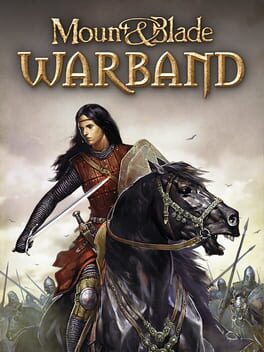
Mount & Blade: Warband — Forging Our Own Destiny in the Blood of Calradia
Every so often, a video game is released that transcends being a mere piece of entertainment and transforms into a blank canvas upon which the player paints their own sprawling epic. Developed by the Turkey-based TaleWorlds Entertainment, Mount & Blade: Warband is exactly this kind of phenomenon. Building upon the foundation of the original game by fixing its flaws, introducing a legendary multiplayer mode, and—most crucially—adding the ability to forge your own kingdom, Warband remains one of the most respected and enduring milestones in independent gaming history, despite the years that have passed. This game never insults your intelligence by calling you a 'Chosen One,' nor does it hand you magical artifacts to save the world. When you take your first steps onto the continent of Calradia, you are an absolute nobody; a vulnerable adventurer with a rusted sword, a swaybacked horse, and a few denars to your name, desperately trying not to starve. The absolute magic of Warband lies in this brutal, unapologetic reality.
In the early game, being chased down by half-naked looters, taken prisoner, and dragged across the map is almost a rite of passage. You scrape by, trading cheap grain between villages or fighting in local arenas just to afford your next meal. But slowly, organically, the tide turns. You recruit a handful of terrified peasants, train them through countless skirmishes, and watch with immense pride as they evolve into hardened, heavily armored veterans. The sense of progression in Warband is so tactile, so intimately earned, that the journey from a starving vagabond to the ruler of an empire feels entirely like your personal achievement. Do you want to shake the earth with the unstoppable heavy cavalry charges of the Swadian Knights? Or perhaps you prefer to build an impenetrable wall of spears and crossbow bolts in the mountain passes with the Rhodoks? Maybe you favor shattering enemy shield walls with the terrifying axes of the Nord Huscarls, or driving your enemies to madness with the hit-and-run tactics of the Khergit horse archers. The game divides Calradia into six distinct, beautifully balanced factions, offering a colossal sandbox of tactical possibilities.
The beating heart of Warband, without a doubt, is its revolutionary combat system. The directional, physics-based melee combat—where the angle of your mouse determines the direction of your swing and your block—is incredibly intuitive to grasp but takes hundreds of hours to truly master. It is not about mashing buttons; it requires reading your opponent's shoulders, timing your parries perfectly, and managing your footwork. But the true glory is found on horseback. When you spur your warhorse into a gallop, couch your lance under your arm, and slam into an enemy infantryman at full speed, the visceral, bone-crunching sound and the violent screen shake deliver one of the most satisfying impacts in all of gaming. In massive field battles, where hundreds of soldiers clash in a chaotic frenzy of steel and blood, being the commander leading from the front lines provides a 'Braveheart' adrenaline rush that almost no other game has ever replicated.
Yet, raw martial prowess is not enough to conquer Calradia. Politics is the lifeblood of the late game. As a vassal to a king, you must carefully navigate the treacherous waters of feudal diplomacy. You must attend feasts, woo the daughters or sons of powerful lords, manage your fiefs, and maintain a high honor rating. One of the most realistic and infuriating moments in gaming occurs when you bleed your army dry to capture a heavily fortified castle, only for your Liege Lord to award it to a rival noble who sat at home eating butter. That is the breaking point. That is the moment you renounce your oath, raise your own banner, and plunge the realm into a state of total rebellion. Suddenly, you are not just a warrior, but a monarch. You must manage your economy, appoint your companions as lords, send emissaries to other kingdoms, and fight multi-front wars to legitimize your rule.
Graphically, even upon its release, Warband was not going to win any beauty contests. Character faces look like melting wax, animations can feel stiff, and the overworld map is functionally barren. But the genius of the game is that after an hour, you completely stop caring. The world feels alive through its systemic mechanics. A dynamic economy means that raiding a village actually impacts the prosperity of the connected city. Opening a velvet weaving enterprise in Rivacheg requires an understanding of supply and demand.
And then, there is the modding community. The passionate community is the eternal life support that makes Warband immortal. With a single click, you can transform Calradia into Middle-earth, the blood-soaked lands of Westeros, the Roman Empire, or a galaxy far, far away. In conclusion, Mount & Blade: Warband is the ultimate antidote to modern, heavily scripted AAA titles that offer cinematic graphics but hollow gameplay. It covers its technical blemishes with the sheer, unadulterated scale of its battles and the absolute freedom it grants the player. When that iconic main menu music swells, say goodbye to your social life, because you have an empire to build.