It Takes Two — The Greatest Co-Op Game Ever Made
It Takes Two is the most inventive co-op game ever designed. Director Josef Fares, the passionate and famously outspoken creative force behind Brothers: A Tale of Two Sons and A Way Out, has created a game that reinvents itself with bewildering frequency. Every thirty minutes, It Takes Two introduces an entirely new gameplay mechanic, often transforming the game into what feels like a different genre entirely. The result is a co-op experience of unparalleled variety, creativity, and joy.
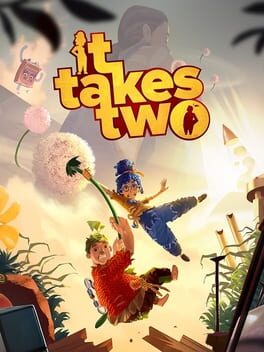
The premise is simple: Cody and May, a married couple on the brink of divorce, are magically shrunk and turned into dolls by their daughter Rose's tears. To break the spell, they must traverse their own home — now a vast, fantastical landscape — and learn to work together again. This setup provides the foundation for an astonishing variety of gameplay scenarios: one section turns the game into a third-person shooter, another into a puzzle platformer, another into a Diablo-style dungeon crawler, and yet another into a competitive minigame collection.
The mechanical variety is the game's greatest triumph. In one level, Cody gains the ability to grow and shrink objects while May receives a hammer that can smash through walls. In another, one player controls a magnet while the other wields a nail gun. In yet another, one player rides a fidget spinner through a rail while the other paraglides above. Each duo of abilities is designed to complement the other, requiring constant communication and coordination. The game never repeats a mechanic — once it's explored an idea, it moves on to the next.
The production values are extraordinary for a mid-budget title. The game is visually stunning, with environments that creatively reinterpret everyday household objects at miniature scale. A garden becomes a lush jungle. A toolshed becomes a war zone. The musical score is charming and dynamic, shifting to match the tone of each new gameplay section.
The competitive minigames scattered throughout the adventure provide brilliant moments of playful rivalry between partners. From snowball fights to whack-a-mole to chess on a grand scale, these diversions break up the cooperative challenges with friendly competition that invariably produces laughter. The musical chapter, where one player controls vocals on a miniature stage while the other manages lighting and effects, is a particular highlight that showcases the game's boundless creative energy.
The narrative, while simple, resonates because it treats the relationship between Cody and May with genuine emotional honesty. Their bickering feels authentic, their gradual reconnection feels earned, and the game's metaphorical parallels — each world representing an aspect of their failing marriage — are handled with surprising subtlety. The Book of Love, their annoyingly enthusiastic guide, provides comic relief while also serving as a meaningful narrative device about the work required to maintain a relationship.
The Friend's Pass feature, which allows the second player to play the entire game for free with only one purchased copy, demonstrates Hazelight's commitment to making co-op gaming as accessible as possible. This generous approach ensures that no partnership is prevented by cost, and it has become a model that other cooperative games have since emulated.
The boss encounters in It Takes Two are spectacularly designed, each one transforming the current mechanics into a climactic confrontation that requires perfect cooperation. The vacuum cleaner boss in the toolshed, the wasp queen battle in the garden, and the snow globe guardian encounter each redefine the game's mechanics in surprising ways. These encounters serve as both gameplay climaxes and emotional turning points in Cody and May's relationship, with the intensity of the cooperative challenge mirroring the difficulty of their marital reconciliation.
The environmental design deserves particular praise for its imaginative reinterpretation of domestic spaces. A child's bedroom becomes a futuristic space station. A garden shed transforms into a medieval battlefield. The family attic reveals a clockwork universe of intricate mechanical puzzles. Each environment is realized with such creative detail and visual polish that exploration becomes its own reward, independent of the narrative and mechanical pleasures that accompany it.
It Takes Two is a game that must be played with another person, and that requirement is its greatest feature. The shared experience of discovery, the laughter of failed attempts, and the satisfaction of synchronized success create bonds between players that few games can match. It won the Game of the Year award in 2021, and it earned every single vote. This is the definitive co-op experience.
However, beyond the dizzying array of gameplay mechanics and the infectious energy of its presentation, It Takes Two succeeds most profoundly in its brave thematic aspirations. Very few video games have ever dared to tackle the messy, uncomfortable, and emotionally complex reality of a failing marriage with such nuance and genuine empathy. Beneath the vibrant, Pixar-quality anthropomorphic tools and talking animals lies a surprisingly mature, emotionally resonant narrative about the fundamental importance of active communication, mutual compromise, and the painful rediscovery of forgotten passion. The fact that the game mechanically forces its two human players to actively communicate, coordinate, and rely upon one another perfectly mirrors the therapeutic journey of Cody and May. Josef Fares and Hazelight Studios did not just create a phenomenal, constantly surprising cooperative platformer; they created an absolute masterclass in narrative synergy, proving that ludonarrative resonance can elevate a game from a fun weekend distraction into a genuinely therapeutic, unforgettable shared experience.