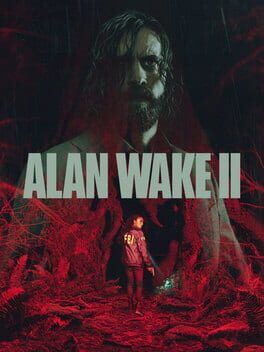
Alan Wake 2 — A Masterwork of Psychological Horror
Alan Wake 2 is the game Remedy Entertainment was born to make. After years of building their reputation with Max Payne, the original Alan Wake, Quantum Break, and Control, the Finnish studio has finally delivered their magnum opus — a survival horror masterpiece that is equal parts Stephen King, David Lynch, and True Detective. It is the most ambitious, artistically coherent, and genuinely terrifying game of the year.
The dual-protagonist structure is a stroke of genius. Players alternate between FBI agent Saga Anderson, investigating a series of ritualistic murders in the Pacific Northwest town of Bright Falls, and Alan Wake himself, trapped in a nightmarish alternate dimension called the Dark Place. Saga's sections play like a modern evolution of Resident Evil — methodical exploration, resource management, and tense combat encounters. Alan's sections are more surreal and experimental, featuring a Mind Place mechanic where the writer literally rewrites reality to solve puzzles and progress.
Visually, Alan Wake 2 is one of the most impressive-looking games ever made. The photorealistic environments — rain-soaked forests, dilapidated cabins, a flooded small-town America — are rendered with an obsessive eye for atmospheric detail. The use of live-action video sequences, seamlessly integrated into the gameplay, creates an uncanny blurring of media that reinforces the game's themes of fiction invading reality. The 'Musical' chapter, featuring a full live-action musical performance by the fictional band Old Gods of Asgard, is one of the most audacious and memorable sequences in gaming history.
The horror is phenomenal. Remedy understands that true horror comes not from jump scares but from sustained atmosphere and psychological dread. The Dark Place sequences, where reality shifts and warps around Alan, create a constant sense of disorientation that is genuinely unsettling. The Taken enemies, wreathed in darkness, are more threatening than ever, and the limited resources ensure that every encounter carries genuine tension.
The Mind Place and Case Board mechanics provide innovative puzzle-solving frameworks. Saga's Case Board allows players to organize clues and evidence in a detective-style cork board, creating logical connections between disparate pieces of information. Alan's Mind Place enables him to rewrite scenes by manipulating narrative elements, choosing different plot threads to alter the physical environment around him. These mechanics gamify the creative and investigative processes in ways that feel fresh and thematically appropriate.
The technical achievement is staggering. Running on the Northlight engine, Alan Wake 2 delivers some of the most photorealistic environments in gaming history. The ray-traced lighting in particular is transformative — the way a flashlight beam cuts through fog, the shimmer of rain on asphalt, the eerie glow of a television in a dark room. The seamless transitions between live-action and in-game footage blur the boundaries of the medium in ways that no previous game has attempted at this level of sophistication.
The interconnected Remedy universe, linking Alan Wake to Control through shared characters and locations, adds a meta-narrative layer that rewards players familiar with Remedy's previous work. The Federal Bureau of Control, the Oceanview Motel, and the concept of Altered World Events create a shared mythology that elevates each individual game within the connected universe.
The sound design and musical direction represent some of the finest audio work in gaming. Petri Alanko's atmospheric score blends ambient electronics with orchestral grandeur to create a soundscape that oscillates between meditative calm and overwhelming dread. The licensed tracks, deployed at key narrative moments with Remedy's signature cinematic timing, provide emotional punctuation that transforms gameplay sequences into unforgettable set pieces. The environmental audio — creaking trees, distant thunder, water lapping against rotting dock pilings — creates a sense of place that is achingly tactile.
The combat system, while initially familiar to survival horror veterans, reveals considerable depth through its weapon customization and light-based mechanics. The flashlight remains central to combat, requiring players to burn away the protective darkness surrounding enemies before conventional weapons become effective. The strategic tension between conserving flashlight batteries and ammunition creates resource management decisions that maintain anxiety even during non-combat exploration. The addition of environmental light sources that can be weaponized adds tactical possibilities that reward creative thinking.
Alan Wake 2 is a landmark achievement in the horror genre and in video game storytelling. It is a game that trusts its audience to engage with complex, non-linear narratives and rewards that engagement with one of the most fascinating, rewarding, and genuinely frightening experiences in the medium.
Alan Wake 2 stands as a monumental triumph in the interconnected, ever-expanding Remedy Connected Universe. Sam Lake and his team have crafted a masterclass in meta-narrative horror, one that fundamentally blurs the suffocating lines between the struggling creator and his darkest creations. The transition from the action-adventure mechanics of the first game to a full-blown, unrelenting survival horror experience allows the psychological dread to breathe, fester, and truly terrify the player. Everything, from the meticulously integrated live-action video sequences and the haunting, diegetic rock music of the Old Gods of Asgard, to the labyrinthine plot structure that demands multiple playthroughs to decipher, screams of a studio operating at the absolute zenith of their creative powers. It is not just an exceptionally frightening video game; it is a profound, surreal, and terrifyingly self-aware meditation on the agonizing, often self-destructive nature of the creative writing process itself.