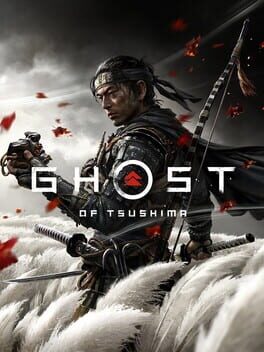
Ghost of Tsushima — The Poetry of Steel and Nature
Ghost of Tsushima is, first and foremost, a love letter. It is a love letter to the samurai cinema of Akira Kurosawa, to the natural beauty of feudal Japan, and to the romantic ideal of a warrior torn between honor and pragmatism. Sucker Punch Productions, a studio primarily known for the Infamous series, took a bold creative leap with this title, and the result is one of the most visually and mechanically accomplished open-world action games ever created.
The combat system is the heart of the experience, and it is magnificent. The katana duels capture the lethal precision and tension of real swordsmanship beautifully. The stance system — where Jin can switch between Stone, Water, Wind, and Moon stances to exploit different enemy types — adds a strategic layer that keeps combat engaging throughout the entire game. Standoffs, where you face an enemy in a cinematic one-on-one duel, are incredibly tense and rewarding. As Jin evolves from a traditional samurai into the feared 'Ghost,' stealth mechanics including smoke bombs, kunai, and wind chimes expand your tactical options dramatically.
Visually, Ghost of Tsushima is a revelation. The island of Tsushima is painted in sweeping strokes of color — golden fields of pampas grass ripple in the wind, autumn leaves cascade through crimson forests, and cherry blossoms drift across moonlit battlefields. The guiding wind mechanic, which replaces traditional waypoint markers with leaves and wind currents, is one of the most elegant and immersive navigation systems ever implemented. The optional Kurosawa Mode, which applies a black-and-white film grain filter, is a beautiful tribute that genuinely transforms the experience.
The story, while perhaps more traditional in structure than some of its contemporaries, is told with sincerity and emotional gravity. Jin Sakai's transformation from a dutiful samurai to a guerrilla fighter is a compelling exploration of identity and sacrifice. The Tales of Tsushima — side quests focused on individual characters — are often surprisingly poignant, adding depth to the world and its inhabitants. The Legends co-op mode, a free post-launch addition, adds substantial replay value with its mythology-inspired missions.
The open world itself is a masterwork of environmental design that avoids the trap of map-marker overload. Instead of cluttering the HUD with icons, the game uses environmental cues — pillars of smoke, singing birds, curious foxes, and the ever-present guiding wind — to draw players toward points of interest organically. Discovering a hidden hot spring for a reflective haiku, following a fox to a hidden Inari shrine, or stumbling upon a serene bamboo strike challenge creates a rhythm of exploration that feels meditative rather than checklist-driven. The world is large enough to feel genuinely expansive yet dense enough that you're never riding for long without encountering something of interest.
The Iki Island expansion, added in the Director's Cut, represents a meaningful evolution of both gameplay and narrative. The island's smaller, more focused geography provides tighter encounter design, while the story — which delves into Jin's traumatic childhood memories — adds significant emotional depth to the protagonist. The introduction of animal sanctuaries, where Jin can play his flute to charm monkeys, deer, and cats, provides charming moments of levity that balance the game's otherwise somber tone.
The photo mode in Ghost of Tsushima deserves special mention as one of the most robust and artistically rewarding in any game. The combination of the game's stunning visual design with extensive camera controls, weather manipulation, and particle effects has produced a community of virtual photographers whose work rivals professional landscape photography. The game's art direction, which prioritizes atmospheric beauty over photorealistic fidelity, ensures that virtually every frame is screenshot-worthy.
The multiplayer Legends mode, released as a free update, transforms the single-player experience into a four-player cooperative adventure steeped in Japanese mythology. The mode features entirely new story missions, a wave-based survival mode, and one of the genre's most challenging raid experiences. The fact that Sucker Punch released this substantial multiplayer component — complete with unique classes, abilities, and gear systems — at no additional cost demonstrates extraordinary generosity toward their player base.
The dueling system deserves special attention as one of the most refined sword combat implementations in gaming history. The Mythic Tales, which send Jin on journeys to learn legendary techniques from the island's most storied warriors, culminate in one-on-one duels that strip away all distractions and focus purely on timing, positioning, and reading the opponent's intentions. These encounters, set against stunning natural backdrops of waterfalls and autumn forests, capture the spiritual essence of samurai cinema in ways that feel genuinely transcendent.
Ghost of Tsushima is proof that the open-world genre still has room for breathtaking innovation in presentation and combat design. It is an experience that treats its cultural source material with deep respect while delivering an action game of the highest caliber. For anyone who has ever dreamed of living out a samurai fantasy, this is the definitive interactive realization of that vision.