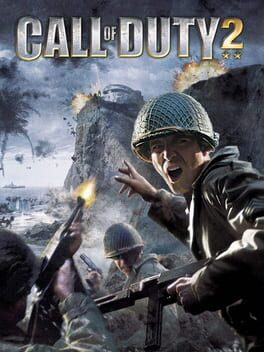
Call of Duty 2 — Brotherhood Forged in the Bloody Trenches
In today’s gaming landscape, the Call of Duty franchise has morphed into a billion-dollar, annualized juggernaut defined by futuristic movement mechanics, absurd crossover skins featuring pop stars and movie monsters, and massive, never-ending Battle Royale maps. It is easy to forget where this titan of the industry came from. But if you dig down to the bedrock of the franchise, you will find the genuine masterpiece that literally rewrote the DNA of the modern First-Person Shooter: Call of Duty 2. Released in the fall of 2005, during the absolute golden age of World War II shooters, the market was heavily saturated with Medal of Honor clones. Yet, Infinity Ward delivered a title so revolutionary, so visceral, and so incredibly polished that the rules of the genre were forever altered. Pushing the absolute hardware limits of PCs and acting as the flagship launch title for the brand new Xbox 360 console, this game did not present war through the eyes of a bullet-sponging superhero. Instead, it threw you into the meat grinder of the 1940s as a series of ordinary, terrified, yet deeply patriotic grunts fighting to survive the apocalypse.
The single most radical revolution Call of Duty 2 brought to the industry—a mechanic that is now the absolute standard in almost every shooter—was the complete and utter annihilation of the traditional "health bar" and the "medkit" system. Prior to 2005, if your health dropped to 10% during a massive firefight, you were forced to break your immersion, ignore the battle, and frantically run around the map looking for a glowing box with a red cross on it to heal. Call of Duty 2 popularized the "regenerating health" mechanic. When you took damage, the edges of your screen would violently pulse red, your character’s breathing would turn into a ragged, painful wheeze, and your vision would blur. To survive, you didn't look for a potion; you had to dive behind hard cover, press your face into the dirt, and catch your breath while bullets chewed up the masonry above your head. This single change drastically accelerated the pacing of the game. It transformed the player from a scavenger hunting for health packs into a dynamic, aggressive combatant bounding from cover to cover, completely dictating the rhythm of the firefight.
Another massive leap forward was the implementation of volumetric smoke grenades. In older games, smoke was merely a visual novelty, a flat texture that barely obscured vision. In Call of Duty 2, especially if you dared to play on the punishingly brutal "Veteran" difficulty, smoke grenades were your only lifeline. The enemy German AI was famously aggressive and brutally accurate. Assaulting an entrenched MG42 machine-gun nest head-on was a guaranteed death sentence. The AI would actively flank you and constantly flush you out of cover with an endless barrage of grenades (the flashing grenade indicator on the screen remains a source of PTSD for veteran players). The only tactical solution was to hurl a smoke grenade directly in front of the bunker, wait for the thick, blinding gray cloud to billow out, and charge blindly through the fog, coughing, shouting, and firing your Thompson submachine gun into the abyss. It created an atmosphere of chaotic, desperate warfare that had never been seen before.
The campaign is a sprawling, blood-soaked epic divided into three distinct theaters of the Second World War. You begin in the freezing, brutal Russian winter as Private Vasili Koslov of the Red Army. Fighting block-by-block through the completely decimated ruins of Moscow and Stalingrad, the game perfectly captures the sheer desperation of the Soviet forces. The iconic tutorial section, where Commissar Letlev forces you to practice throwing potatoes instead of actual grenades because "real grenades are worth more than you are," flawlessly sets the grim, disposable tone of the Eastern Front. You then transition to the scorching, sun-bleached deserts of North Africa as Sergeant John Davis of the British 7th Armored Division. Here, you engage in blind, chaotic skirmishes against Rommel’s forces during massive sandstorms and defend the fortified ridges of El Alamein against overwhelming panzer assaults. Finally, you step into the boots of Corporal Bill Taylor of the American Rangers. The American campaign features the legendary, harrowing D-Day assault on Pointe du Hoc. Scaling the sheer, towering cliffs using rope launchers while German defenders rain grenades and machine-gun fire down upon your head is a cinematic sequence that rivals the opening of Saving Private Ryan.
The atmosphere and sound design were Call of Duty 2's most devastating weapons. The battlefield was a cacophony of authentic, terrifying noise. It wasn't just background music; it was the frantic, localized shouting of your squadmates ("German infantry, behind the sandbags, right flank!"), dynamically warning you of threats. It was the concussive, ear-ringing silence that followed a mortar shell exploding too close to your position, temporarily deafening you while the screen shook violently. The weapon sounds were textbook perfection. The heavy, metallic, rhythmic thud of a Browning Automatic Rifle, the terrifying crack of a German Kar98k sniper rifle, and, of course, the iconic, satisfying "ping!" of the M1 Garand ejecting its empty clip—these sounds elevated the gunplay to an art form.
Ultimately, Call of Duty 2 stripped away the romanticism of war and presented a chaotic, terrifying, and awe-inspiring vision of combat centered around brotherhood and survival in the trenches. It represents the absolute pinnacle of single-player FPS storytelling from that era. The very foundation of the modern shooters you play today was meticulously laid in the bloody snow of Stalingrad and the sands of North Africa by this exact game. Even when viewed without the rose-tinted glasses of nostalgia, its pacing, level design, and visceral combat remain a pure, magnificent classic that holds up flawlessly today.