BioShock — The Rusted and Suffocating Beauty of a Utopia Collapsed by Human Hubris
For much of their developmental history, video games were viewed by certain circles as mere superficial entertainment — ruthlessly criticized for being unable to transcend beyond fast reflexes, violence, and instant gratification. But in 2007, the brilliant game designer Ken Levine and Irrational Games arrived on the scene with what amounted to an art manifesto for the gaming industry. BioShock is not merely a production that perfects the mechanics of the first-person shooter genre and breaks new ground in atmospheric design — it is also an interactive literary masterpiece that slaps us in the face with the great philosophical movements of the 20th century, particularly writer Ayn Rand's controversial philosophy of Objectivism, free-market capitalism, and the dark consequences of science stripped of all moral boundaries.
The game's opening sequence is, without question, one of the most iconic, most striking, and aesthetically most memorable moments in gaming history. The year is 1960. In the pitch darkness of night, in the middle of the Atlantic Ocean, you are the sole survivor of a terrible plane crash. Amid the flames dancing on the ocean surface like hellfire and the smoke burning your lungs, you reach an ominous yet solitary lighthouse rising from the water. You board a bathysphere inside the lighthouse and begin your slow descent into the ocean depths. A small screen inside flickers to life and that famous monologue — destined to be carved into your mind — begins to echo: 'I am Andrew Ryan, and I'm here to ask you a question. Is a man not entitled to the sweat of his brow?'
When the bathysphere glides behind an underwater mountain, the incredible utopian city of Rapture — with its massive skyscrapers, brilliant neon lights, and whales swimming among the structures — unfolds before your eyes in all its glory. But this unparalleled splendor and dream lasts only seconds. You quickly realize in horror that this dream city has actually been transformed into a nightmare overflowing with blood, savagery, and madness — a massive tomb rusting and decaying at the bottom of the ocean.
Rapture is an entity more alive, more layered, and more tragic than even the game's main characters. Designed in the captivating Art Deco architecture of the 1920s and 30s, this city was built at the bottom of the ocean for the world's most brilliant minds, artists, and scientists to work in complete freedom from government censorship, religious morality, and social oppression. But Andrew Ryan's uncontrolled fantasy of 'freedom and absolute individualism' prepared its own apocalypse with the discovery of 'ADAM' — a substance derived from sea slugs that rewrites human DNA, granting miraculous powers called Plasmids. The lust for limitless power, eternal beauty, and superhuman intelligence transformed Rapture's citizens into 'Splicers' — addicts whose bodies have mutated, whose faces have shattered, who have lost their minds and savagely tear each other apart for just a bit more ADAM.
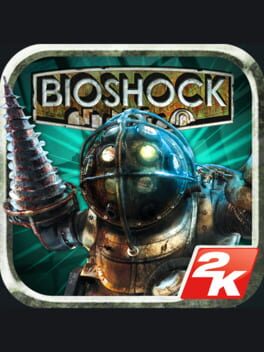
BioShock's most iconic and tragic figures are undoubtedly the 'Big Daddies' and 'Little Sisters.' Little Sisters — girls whose brains have been genetically washed, parasites implanted within them so they can harvest ADAM from corpses — and Big Daddies — massive, heavily armored protectors imprisoned in old-diving-suit shells, programmed to protect these girls at any cost — constitute the moral center of the game. When you hear the heavy, earth-shaking footsteps of a Big Daddy in a dark corridor and see the red light of its helmet, the fear you feel is immense. When you finally defeat one after an enormous battle that depletes all your ammunition, the game confronts you with that terrible decision: will you rescue this tearful little girl and cleanse the parasite within her, or will you ruthlessly 'harvest' and kill her to maximize your power?
The gameplay and combat system perfectly reflect the chaos of this savage environment. With Plasmids in your left hand, you can zap enemies with lightning and electrocute them in water, hurl explosive barrels with telekinesis, or set them ablaze with a snap of your fingers. In your right hand, you carry the era's heavy mechanical weapons — shotguns, machine guns, or grenade launchers. Combining these two different powers — for instance, freezing an enemy then shattering them with a wrench — offered a revolutionary tactical combat richness for its time. Using the water and oil puddles in the environment as weapons was a brilliantly designed element of environmental interaction.
But the element that makes BioShock a permanent fixture on 'greatest games of all time' lists, that elevates it to legendary status in popular culture, is the mind-blowing twist that detonates in the middle of the story. The phrase 'Would you kindly?' — spoken constantly by Atlas, the character who guides you via radio throughout the game — appears to be a simple, polite courtesy. But it transforms into the greatest, most blood-curdling revelation of mind control in gaming history. This moment is not merely a shocking narrative surprise — it is a monumental philosophical critique directed at the very nature of video games themselves, at the player's so-called 'free will' within the game. We players, carrying out every task given to us on screen without question, following the arrows — had we ever stopped to consider whose slaves we truly were?
Ultimately, BioShock is an extraordinarily dark, devastating masterpiece that paints a portrait of human nature, greed, hubris, and the collapse of ideologies on the cracked glass of a city rusting beneath the waves. This unique experience — which melds the philosophical and literary depth of a novel, the visual aesthetic and claustrophobic atmosphere of cinema, and the interactive power of video games in the same crucible — is a bitter but mind-illuminating draught of ocean water that every gamer should swallow at least once in their life. The phrase 'A man chooses, a slave obeys' will continue to echo in a corner of your mind for years after the game is over.