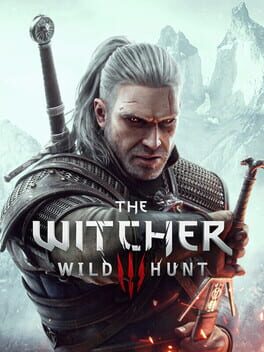
The Witcher 3: Wild Hunt — A Masterclass in Open-World RPG Design
When we carefully examine the history of role-playing games, we occasionally encounter a production that doesn't merely shake the standards of its own genre but fundamentally reshapes the definition of 'perfection' across the entire entertainment industry. The Witcher 3: Wild Hunt, adapted from Andrzej Sapkowski's fantasy literature series and presented to the gaming world by Polish studio CD Projekt Red in 2015, is precisely such a masterpiece. From the moment it hit the market, it planted itself on a nearly unreachable summit against which every subsequent open-world game would be measured. But what elevates this game to legendary status is not its vast map, its stunning graphics, or its intricate skill trees alone. What truly makes it a masterpiece is its ability to weave the contradictions of human nature, moral grey areas, the devastating impact of war on ordinary people, and the warm love hidden within seemingly hardened characters — all stitched together with the precision of fine embroidery.
At the center of this vast and chaotic world stands Geralt of Rivia — the most famous member of the Witcher order, a group of mutants who have undergone genetic mutations to gain superhuman reflexes and senses, trained since childhood to become emotionless killing machines. With his cat-like eyes, snow-white hair, two swords strapped to his back — steel for humans, silver for monsters — and that famous deep, sardonic voice, Geralt is light-years removed from the classic 'chosen hero who saves the world' archetype. He doesn't chase kings or gods; he cleans swamp monsters from villages for a handful of gold coins, endures suspicious glances and insults in every tavern he enters, and is an outcast whom society simultaneously needs and despises. Yet the game's main story pulls this professional killer into a motivation far more personal, far deeper and more emotional than worldly concerns: finding Ciri — not his biological daughter, but a girl he loves as his own, who harbors an ancient and dangerous power within her.
The game's open world, 'The Continent,' is divided into three main regions, each possessing its own soul, its own sociological structure, and a unique atmosphere. Velen, also known as 'No Man's Land,' is the capital of desolation — a land freshly scarred by war, its fields watered with blood, its villagers dying of starvation, and its vast swamps teeming with sinister entities. When you see the corpses hanging from tree branches, the orphaned children caked in mud, and the populace worshipping demonic entities deep in the forests out of sheer desperation, you feel in your bones how masterfully Velen embodies the theme of decay. From there, when you reach Novigrad, you find a massive, living, breathing medieval metropolis, but behind the glittering facade of this bustling port city lie fanatical clergymen burning witches and non-humans in the streets, political intrigue, and ruthless criminal organizations. Finally, the Skellige Islands — inspired by Scandinavian and Viking mythology — offer the player the freezing but magnificent beauty of the wild, with their steep cliffs, fierce seas, honor-above-all clans, and snow-capped peaks.
The true mastery that seats The Witcher 3 on the throne of gaming history is unquestionably the perfection of its quest design and writing. In this game, you simply cannot find the shallow, soulless busywork quests common in other RPGs of its era. Even a side quest as comical and absurd as searching for a lost frying pan in the forest can lead you to coded notes left by an old soldier and a sorrowful war tragedy. But the writing reaches its highest summit in that famous quest chain etched into every player's memory: 'The Bloody Baron.' In this story, the player is forced to help a despotic, rough-hewn warlord who has physically abused his own family while drunk. In any other game, you'd slap a 'bad guy' label on this character and kill him within the first minute. But in The Witcher 3's universe, this character slowly peels apart in layers. When you see his remorse, the deep guilt he carries for his unborn child, the desperation he has fallen into, and his internal reckoning, your judgments shatter. The game doesn't present you with right or wrong — it forces you to choose between 'bad' and 'less bad,' with consequences that will come back to haunt your conscience hours later.
The combat and gameplay mechanics perfectly support the fantasy of being a Monster Hunter. As Geralt, you cannot simply walk into a random cave, swing your sword, and cut down a massive Leshen or Noonwraith. Just as in the books, battle begins with preparation. You must open the Bestiary to read about your enemy's species, apply the correct oil to your steel or silver blade, drink Witcher potions that grant superhuman powers while carefully balancing your toxicity level, and use magical Signs like Igni, Quen, and Aard at the right moment. When you complete your preparation and face the monster, the heavy sword strikes and well-timed dodge maneuvers transform combat into a deadly, tactical dance. Moreover, amidst all this bloodshed, the magnificent card game 'Gwent' — played with people in taverns — has spawned into a massive cultural phenomenon of its own. So much so that players often set aside saving the world entirely to roam from village to village searching for Gwent cards.
It is impossible to pass over this visual and narrative feast without crowning it with some of the finest music in gaming history. The album created by Marcin Przybylowicz, Mikolai Stroinski, and the Polish folk metal band Percival speaks directly to your soul. The sharp Slavic vocals that kick in during combat send the adrenaline in your blood through the roof, while the violin melodies that gently slip in as you wander through a desolate Velen village at sunset or atop Skellige's peaks are loneliness and sorrow put to notes.
Furthermore, the two massive expansion packs released after the game's launch — Hearts of Stone and Blood and Wine — have filled the concept of 'additional content' so thoroughly that they are far superior in quality and duration to many full-priced new games sold by other studios. In the first pack, you play mind games with Gaunter O'Dimm — a villain so terrifying he would make cinema history jealous. In the second, you bid Geralt a dreamlike, bittersweet but peaceful farewell in the sun-drenched, colorful wine country of Toussaint in the south.
Ultimately, The Witcher 3: Wild Hunt is a philosophical text about how monsters lurk not only in forests but most often within the hearts of men; a psychological experiment in which you are crushed under the weight of your moral choices; and a literary fairy tale with flawlessly written characters that you will never forget for as long as you live.