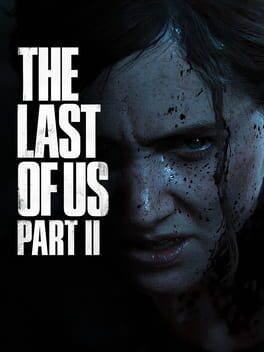
The Last of Us Part II — A Brutal Meditation on Violence and Forgiveness
The Last of Us Part II is not a game that wants to be liked. It is a game that wants to be felt. Naughty Dog's sequel to their 2013 masterpiece takes the player on a harrowing, emotionally exhausting journey through the consequences of violence in a post-apocalyptic world. It is, by almost any technical metric, a flawless production — and its narrative ambitions, while deeply polarizing, represent some of the boldest storytelling ever attempted in the medium.
Mechanically, Part II represents a significant evolution from its predecessor. The combat is visceral and intensely physical. Every encounter feels dangerous and grounded, with enemies calling out to each other by name, flanking intelligently, and reacting with genuine horror when their companions are killed. The prone crawling mechanic, the expanded crafting system, and the introduction of a dedicated dodge button transform the stealth-action gameplay into something more dynamic and strategic. The accessibility options are industry-leading, ensuring that the game can be enjoyed regardless of ability.
The game's visual fidelity is simply extraordinary. From the overgrown ruins of Seattle, where nature has reclaimed the urban landscape in hauntingly beautiful ways, to the snow-covered mountains of Jackson, Wyoming, every environment is rendered with an obsessive attention to detail. The character animation, particularly in the facial performance capture, sets a new benchmark for the industry. The micro-expressions on Ellie's face during pivotal story moments convey volumes without a single word being spoken.
The narrative structure — which asks players to spend significant time embodying a character positioned as an antagonist — is among the most daring creative choices in mainstream gaming. It forces an uncomfortable empathy, compelling players to understand perspectives they might instinctively reject. This isn't cruelty for its own sake; it's a deliberate, artful exploration of how cycles of violence perpetuate themselves. The final act, set on the shores of Santa Barbara, delivers one of the most emotionally complex conclusions in the history of the medium.
The world-building in Part II expands the post-apocalyptic universe significantly. Seattle's three distinct zones — Capitol Hill, Hillcrest, and the waterfront — each have their own ecological character and narrative purpose. The WLF (Washington Liberation Front) and the Seraphites provide contrasting models of post-apocalyptic society, each compelling in their own way. The game explores the psychological toll of survival with unflinching honesty, showing how trauma, ideology, and desperation can transform ordinary people into both heroes and monsters. The hospital sequence in particular is a masterclass in environmental storytelling that reveals the full horror of the outbreak's early days.
The level design is among the most sophisticated in action gaming. The game frequently opens up into semi-open environments where players can choose their path through an encounter space. The Downtown Seattle chapter, which provides a large explorable area with optional buildings and hidden stories, represents a fascinating expansion of the game's linear structure. The encounter design rewards patient observation and creative use of the environment — luring enemies into trap mines, using throwable bricks as distractions, or exploiting the game's advanced physics to create improvisational solutions.
The audio design is phenomenal. Gustavo Santaolalla returns with a haunting score that uses his signature prepared guitar textures to create an atmosphere of melancholic beauty. The combat audio — the wet impact of melee strikes, the desperate gasping of strangled enemies, the terrified pleas of wounded fighters — reinforces the game's central thesis that violence is never clean or heroic. The environmental audio, from the distant groans of infected to the patter of rain on ruined buildings, creates an immersive soundscape that is consistently unnerving.
The Infected design has evolved significantly from the first game, introducing terrifying new variants that demand different tactical approaches. The Shamblers, hulking acid-cloud creatures encountered in waterlogged environments, require careful crowd control and environmental awareness. The Rat King, a colossal amalgamation of decades-old infected fused together in the bowels of a hospital, provides one of the most genuinely horrifying encounters in gaming. These designs reinforce the game's commitment to a world that is progressively more dangerous and more desperate, where even the environment itself has become hostile.
The multiplayer Factions mode, while ultimately cut from Part II's release, was reconceived as a standalone project that speaks to the quality of the game's core mechanics. The combat system — with its weighty animations, strategic resource management, and organic AI behavior — contains a depth and tactility that would sustain competitive multiplayer engagement. The fact that Naughty Dog invested years of additional development into expanding these systems demonstrates their confidence in the mechanical foundation they built.
The Last of Us Part II is a work of art that will be debated for years to come. It is not always enjoyable — it is often grueling, uncomfortable, and deeply sad. But it is undeniably powerful, technically transcendent, and created with an artistic conviction that demands respect. Whether you love the choices it makes or not, there is no denying that it pushes the boundaries of what interactive storytelling can achieve.